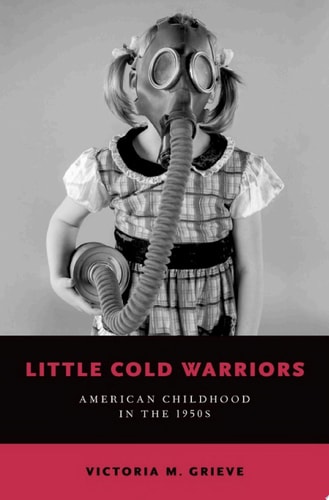
Little Cold Warriors: American Childhood in the 1950s
0
0
As an Amazon Associate and affiliate partner, Menrva Books earns from qualifying purchases. Learn more
Author Description
Both conservative and liberal Baby Boomers have romanticized the 1950s as an age of innocence--of pickup ball games and Howdy Doody, when mom stayed home and the economy boomed. These nostalgic narratives obscure many other histories of postwar childhood, one of which has more in common with the war years and the sixties, when children were mobilized and politicized by the U.S. government, private corporations, and individual adults to fight the Cold War both at home and abroad. Children battled communism in its various guises on television, the movies, and comic books; they practiced safety drills, joined civil preparedness groups, and helped to build and stock bomb shelters in the backyard. Children collected coins for UNICEF, exchanged art with other children around the world, prepared for nuclear war through the Boy and Girl Scouts, raised funds for Radio Free Europe, sent clothing to refugee children, and donated books to restock the diminished library shelves of war-torn Europe. Rather than rationing and saving, American children were encouraged to spend and consume in order to maintain the engine of American prosperity. In these capacities, American children functioned as ambassadors, cultural diplomats, and representatives of the United States. Victoria M. Grieve examines this politicized childhood at the peak of the Cold War, and the many ways children and ideas about childhood were pressed into political service. Little Cold Warriors combines approaches from childhood studies and diplomatic history to understand the cultural Cold War through the activities and experiences of young Americans.
Menrva's Summary
THE THESIS
How did the United States government and private institutions mobilize American children as active participants in the ideological and political conflicts of the Cold War during the 1950s? Victoria M. Grieve, a historian specializing in American cultural and diplomatic history, utilizes a synthesis of childhood studies and archival research to challenge the romanticized narrative of the 1950s as a period of domestic innocence. She argues that children were systematically politicized and utilized as cultural diplomats and economic agents to advance American interests both domestically and internationally.
THE SCOPE MAP
What You Will Find
- Analysis of children's participation in civil defense, including safety drills and bomb shelter construction.
- Examination of media consumption patterns in television, film, and comic books as tools for anti-communist indoctrination.
- Documentation of children's roles in international aid programs like UNICEF and Radio Free Europe.
- Exploration of the intersection between consumer culture and national economic policy.
Scope Limits
- The study focuses primarily on the United States, with limited comparative analysis of childhood experiences in Soviet-bloc nations.
- The text prioritizes institutional and cultural history over individual psychological case studies of children.
THE AUTHORITY PERSPECTIVE
Scholars in the fields of history and childhood studies frequently cite this work for its ability to bridge the gap between diplomatic history and social history. Readers often note the academic rigor of the prose, which provides a detailed examination of how political ideologies permeate the daily lives of youth.
Page Count:
215
Publication Date:
2018-01-01
Publisher:
Oxford University Press
ISBN-10:
0190675705
ISBN-13:
9780190675707
History
Cold War
Childhood Studies
Cultural History
Special Topics
Social History
American History















