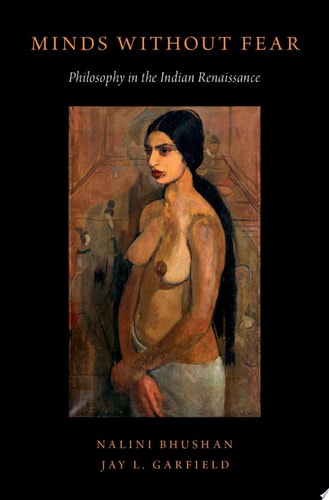
Minds Without Fear: Philosophy in the Indian Renaissance
0
0
As an Amazon Associate and affiliate partner, Menrva Books earns from qualifying purchases. Learn more
Author Description
Minds Without Fear is an intellectual and cultural history of India during the period of British occupation. It demonstrates that this was a period of renaissance in India in which philosophy--both in the public sphere and in the Indian universities--played a central role in the emergence of a distinctively Indian modernity. This is also a history of Indian philosophy. It demonstrates how the development of a secular philosophical voice facilitated the construction of modern Indian society and the consolidation of the nationalist movement. Authors Nalini Bhushan and Jay Garfield explore the complex role of the English language in philosophical and nationalist discourse, demonstrating both the anxieties that surrounded English, and the processes that normalized it as an Indian vernacular and academic language.Garfield and Bhushan attend to both Hindu and Muslim philosophers, to public and academic intellectuals, to artists and art critics, and to national identity and nation-building. Also explored is the complex interactions between Indian and European thought during this period, including the role of missionary teachers and the influence of foreign universities in the evolution of Indian philosophy. This pattern of interaction, although often disparaged as "inauthentic" is continuous with the cosmopolitanism that has always characterized the intellectual life of India, and that the philosophy articulated during this period is a worthy continuation of the Indian philosophical tradition.
Menrva's Summary
THE THESIS
How did the development of a secular philosophical voice in colonial India facilitate the construction of modern Indian society and the nationalist movement? Authors Jay L. Garfield and Nalini Bhushan, both established scholars in philosophy and South Asian studies, utilize a comprehensive historical framework to examine the intellectual landscape of India under British occupation. They argue that this era was not merely a period of colonial subjugation, but a renaissance where philosophy served as a critical tool for defining Indian modernity and identity. By analyzing the intersection of public discourse, academic institutions, and nationalist politics, the authors demonstrate how Indian thinkers navigated the influence of European thought to forge a distinct, cosmopolitan philosophical tradition.
THE SCOPE MAP
What You Will Find
- An analysis of the role of the English language in Indian philosophical and nationalist discourse.
- A comparative study of both Hindu and Muslim intellectual contributions to the period.
- Examination of the interactions between Indian thinkers and European missionary or academic influences.
Scope Limits
- The text focuses primarily on the intellectual and philosophical developments rather than a comprehensive political or military history of the British Raj.
- It does not provide an exhaustive survey of every regional philosophical school, prioritizing those most influential to the emergence of modern Indian identity.
THE AUTHORITY PERSPECTIVE
Scholars and historians of philosophy frequently cite this work as a significant contribution to the understanding of non-Western modernities and the evolution of Indian intellectual life. Readers often note the academic density of the prose, which provides a rigorous examination of complex philosophical shifts during the colonial era.
Page Count:
344
Publication Date:
2017-01-01
Publisher:
Oxford University Press
ISBN-10:
0190672994
ISBN-13:
9780190672997
Philosophy
History
Indian History
Asian History
History & Surveys
Hindu
Intellectual History
Community Tags
Similar Books