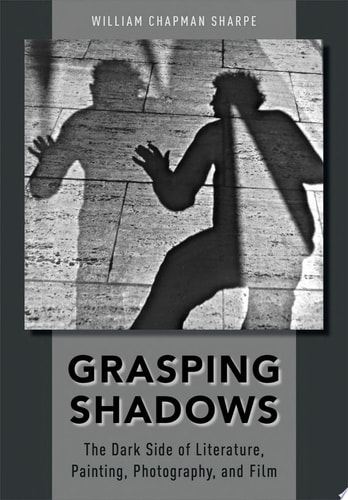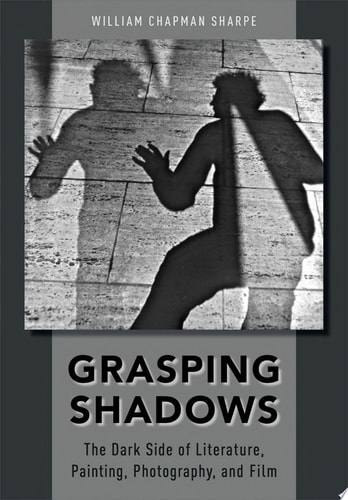
Grasping Shadows
0
0
As an Amazon Associate and affiliate partner, Menrva Books earns from qualifying purchases. Learn more
Author Description
What's In A Shadow? Menace, Seduction, Or Salvation? Immaterial But Profound, Shadows Lurk Everywhere In Literature And The Visual Arts, Signifying Everything From The Treachery Of Appearances To The Unfathomable Power Of God. From Plato To Picasso, From Rembrandt To Welles And Warhol, From Lord Of The Rings To The Latest Video Game, Shadows Act As Central Players In The Drama Of Western Culture. Yet Because They Work Silently, Artistic Shadows Often Slip Unnoticed Past Audiences And Critics. Conceived As An Accessible Introduction To This Elusive Phenomenon, Grasping Shadows Is The First Book That Offers A General Theory Of How All Shadows Function In Texts And Visual Media. Arguing That Shadow Images Take Shape Within A Common Cultural Field Where Visual And Verbal Meanings Overlap, William Sharpe Ranges Widely Among Classic And Modern Works, Revealing The Key Motifs That Link Apparently Disparate Works Such As Those By Fra Angelico And James Joyce, Clementina Hawarden And Kara Walker, Charles Dickens And Kumi Yamashita. Showing How Real-world Shadows Have Shaped The Meanings Of Shadow Imagery, Grasping Shadows Guides The Reader Through The Techniques Used By Writers And Artists To Represent Shadows From The Renaissance Onward. The Last Chapter Traces How Shadows Impact The Art Of The Modern City, From Renoir And Zola To Film Noir And Projection Systems That Capture The Shadows Of Passers-by On Streets Around The Globe. Extending His Analysis To Contemporary Street Art, Popular Songs, Billboards, And Shadow-theatre, Sharpe Demonstrates A Practical Way To Grasp The Dark Side That Looms All Around Us.
Menrva's Summary
THE THESIS
How do shadows function as a consistent, symbolic, and structural element across Western literature and visual arts? William Chapman Sharpe, a scholar of literature and visual culture, posits that shadows occupy a shared cultural field where verbal and visual meanings intersect. By examining a broad range of historical and contemporary works, he establishes a general theory of shadow imagery, arguing that these silent, often overlooked elements are central to the construction of meaning in Western artistic expression.
THE SCOPE MAP
What You Will Find
- A comprehensive analysis of shadow motifs from the Renaissance to the present day.
- A theoretical framework for interpreting shadows in both textual and visual media.
- Comparative studies linking diverse creators such as Fra Angelico, James Joyce, and Kara Walker.
- An investigation into the impact of urban environments and modern projection technology on shadow representation.
Scope Limits
- The analysis is primarily focused on Western cultural traditions and may not encompass non-Western artistic perspectives on shadow imagery.
- The text serves as an introductory theory rather than an exhaustive catalog of every instance of shadow usage in art history.
THE AUTHORITY PERSPECTIVE
Scholars and critics recognize this work as a unique contribution to visual studies, noting its ability to bridge the gap between literary analysis and art history. Readers frequently highlight the accessibility of the prose, which manages to synthesize complex theoretical concepts into a coherent study of cultural motifs.
Page Count:
400
Publication Date:
2017-01-01
Publisher:
Oxford University Press
ISBN-10:
0190682256
ISBN-13:
9780190682255
Philosophy
Media Studies
Literary Criticism
Art History
Visual Arts
Community Tags
Similar Books