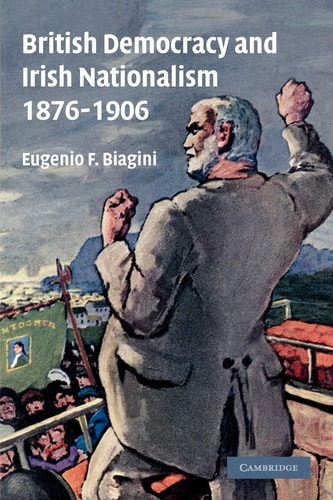
British Democracy and Irish Nationalism 1876-1906
0
0
As an Amazon Associate and affiliate partner, Menrva Books earns from qualifying purchases. Learn more
Author Description
A major 2007 study of the impact of Home Rule on liberalism and popular radicalism in Britain and Ireland. Eugenio Biagini argues that between 1876 and 1906 the crisis of public conscience caused by the Home Rule debate acted as the main catalyst in the remaking of popular radicalism. This was not only because of Ireland's intrinsic importance but also because the 'Irish cause' came to be identified with democracy, constitutional freedoms and humanitarianism. The related politics of emotionalism did not aid in finding a solution to either the Home Rule or the Ulster problem but it did create a popular culture of human rights based on the conviction that, ultimately, politics should be guided by non-negotiable moral imperatives. Adopting a comparative perspective, this book explores the common ground between Irish and British democracy and makes a significant contribution to the history of human rights, imperialism and Victorian political culture.
Menrva's Summary
THE THESIS
The Home Rule debate fundamentally reshaped popular radicalism in Britain and Ireland between 1876 and 1906. Eugenio Biagini argues that this crisis of public conscience, fueled by Ireland's intrinsic importance and its identification with democracy and humanitarianism, acted as the primary catalyst for change. While the associated politics of emotionalism complicated solutions to the Home Rule and Ulster problems, it fostered a popular culture of human rights grounded in the belief that politics should be guided by non-negotiable moral imperatives. The book adopts a comparative perspective to explore the shared foundations of Irish and British democracy.
THE SCOPE MAP
- Analysis of the impact of the Home Rule crisis on British liberalism and popular radicalism.
- Exploration of the period between 1876 and 1906 as a pivotal era for political transformation.
- Examination of how the 'Irish cause' became intertwined with concepts of democracy, constitutional freedoms, and humanitarianism.
- Discussion of the role of emotionalism in political discourse and its effect on finding solutions.
- Investigation into the creation of a popular culture of human rights.
- Comparative perspective on the common ground between Irish and British democracy.
- Contribution to the history of human rights, imperialism, and Victorian political culture.
THE AUTHORITY PERSPECTIVE
This significant 2007 study by Eugenio Biagini is recognized for its in-depth analysis of the intricate relationship between British democracy and Irish nationalism during a critical period. The book is noted for its argument that the Home Rule debate served as a major catalyst in the evolution of popular radicalism, linking it to broader democratic and humanitarian ideals. Its comparative approach is praised for illuminating the shared aspects of Irish and British democratic development and its contributions to the understanding of human rights, imperialism, and Victorian political culture.
Page Count:
434
Publication Date:
2010-11-11
Publisher:
Cambridge University Press
ISBN-10:
0521180910
ISBN-13:
9780521180917
Non-Fiction
History
Human rights
British History
Democracy
Imperialism
Liberalism
Irish History
Political History
Victorian Era
Community Tags
Similar Books