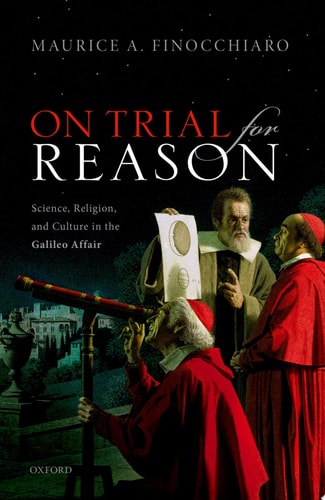
On Trial for Reason
0
0
As an Amazon Associate and affiliate partner, Menrva Books earns from qualifying purchases. Learn more
Author Description
In 1633 The Roman Inquisition Condemned Galileo As A Suspected Heretic For Defending The Astronomical Theory That The Earth Moves, And Implicitly Assuming The Theological Principle That Scripture Is Not Scientific Authority. This Controversial Event Has Sent Ripples Down The Centuries, Embodying The Struggle Between A Thinker Who Came To Be Regarded As The Father Of Modern Science, And An Institution That Is Both One Of The World's Greatest Religions And Most Ancient Organizations. The Trial Has Been Cited Both As A Clear Demonstration Of The Incompatibility Between Science And Religion, And Also A Stunning Exemplar Of Rationality, Scientific Method, And Critical Thinking. Much Has Been Written About Galileo's Trial, But Most Works Argue From A Particular Point Of View - That Of Secular Science Against The Church, Or Justifying The Religious Position. Maurice Finocchiaro Aims To Provide A Balanced Historical Account That Draws Out The Cultural Nuances. Unfolding The Intriguing Narrative Of Galileo's Trial, He Sets It Against Its Contemporary Intellectual And Philosophical Background. In Particular, Finocchiaro Focuses On The Contemporary Arguments And Evidence For And Against The Earth's Motion, Which Were Based On Astronomical Observation, The Physics Of Motion, Philosophical Principles About The Nature Of Knowledge, And Theological Principles About The Authority And The Interpretation Of Scripture. Following Both Sides Of The Controversy And Its Far-reaching Philosophical Impact, Finocchiaro Unravels The Complex Relationship Between Science And Religion, And Demonstrates How Galileo Came To Be Recognised As A Model Of Logical Reasoning.
Menrva's Summary
THE THESIS
How did the 1633 trial of Galileo Galilei function as a pivotal intersection between emerging scientific methodology and established theological authority? Maurice A. Finocchiaro, a scholar specializing in the history of science and logic, examines the trial not as a simple clash between faith and reason, but as a complex intellectual debate. He utilizes primary source documents and contemporary arguments to reconstruct the philosophical, astronomical, and theological frameworks that informed both Galileo and the Roman Inquisition.
THE SCOPE MAP
What You Will Find
- Analysis of 17th-century astronomical evidence regarding the Earth's motion.
- Examination of the physics of motion and philosophical principles of knowledge prevalent in the era.
- Detailed review of theological arguments concerning the interpretation of scripture.
Scope Limits
- The text does not provide a comprehensive biography of Galileo's entire life.
- It does not focus on the personal or political motivations of individual inquisitors outside of their intellectual arguments.
THE AUTHORITY PERSPECTIVE
Scholars and historians frequently cite this work for its rigorous, balanced approach to a historically polarized subject. Readers often note the academic density of the prose, which serves as a foundational resource for those studying the intersection of scientific method and institutional authority.
Page Count:
304
Publication Date:
2019-01-01
Publisher:
Oxford University Press
ISBN-10:
0192518844
ISBN-13:
9780192518842
Biography
Science
History
Religion
Philosophy
Intellectual History
Community Tags
Similar Books