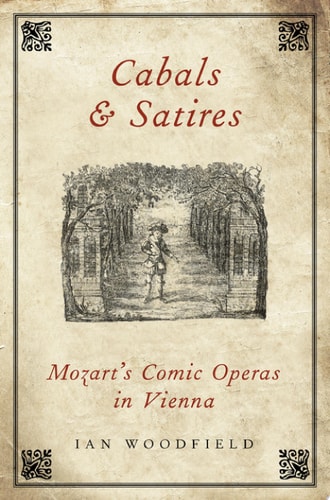
Cabals and Satires: Mozart's Comic Operas in Vienna
0
0
As an Amazon Associate and affiliate partner, Menrva Books earns from qualifying purchases. Learn more
Author Description
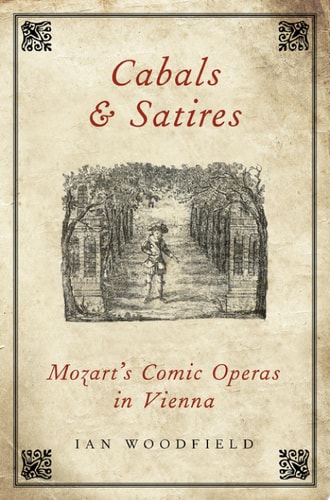
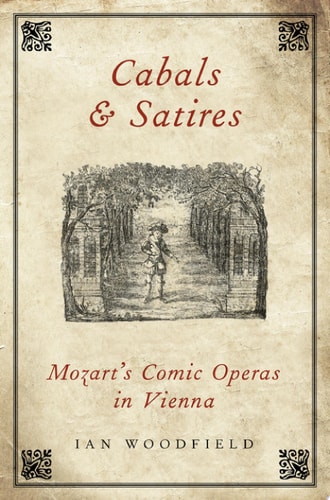
When Joseph II placed his opera buffa troupe in competition with the re-formed Singspiel, he provoked an intense struggle between supporters of the rival national genres, who organized claques to cheer or hiss at performances, and encouraged press correspondents to write slanted notices. It was in this fraught atmosphere that Mozart collaborated with librettist Lorenzo da Ponte on his three mature Italian comedies--Figaro, Don Giovanni, and Così fan tutte.In Cabals and Satires: Mozart's Comic Operas in Vienna, Ian Woodfield brings the fascinating dynamics of this inter-troupe contest into focus. He reveals how Mozart, while not immune from the infighting, was able to weather satirical attacks, successfully negotiate the unpredictable twists and turns of theatre politics during the lean years of the Austro-Turkish War, and seal his reputation with a revival of Figaro in 1789 as a Habsburg festive work. Mozart's deft navigation of the turbulent political waters of this period left him well placed to benefit from the revival of the commercial stage in Vienna--the most enduring musical consequence of the war years.
Menrva's Summary
THE THESIS
This work investigates how the intense rivalry between the Italian opera buffa troupe and the German Singspiel in late 18th-century Vienna influenced the creative output and professional survival of Wolfgang Amadeus Mozart. Dr. Ian Woodfield, a specialist in musicology, utilizes archival records, contemporary press accounts, and theatrical correspondence to argue that Mozart’s success was contingent upon his ability to navigate the volatile political and social climate of the Habsburg court during the Austro-Turkish War.
THE SCOPE MAP
What You Will Find
- Analysis of the competition between the Italian opera buffa and the German Singspiel troupes.
- Examination of the political influence of Joseph II on Viennese theatrical culture.
- Detailed study of the production history of Figaro, Don Giovanni, and Così fan tutte.
- Contextualization of the 1789 revival of Figaro as a Habsburg festive work.
Scope Limits
- The text does not provide a comprehensive biography of Mozart’s entire life or his non-operatic compositions.
- The analysis is geographically and temporally restricted to the Viennese theatrical scene between the mid-1780s and 1789.
THE AUTHORITY PERSPECTIVE
Scholars and music historians frequently cite this work for its meticulous reconstruction of the socio-political pressures facing composers in the late 18th century. Readers often note the academic density of the prose, which provides a rigorous examination of primary source material for those interested in the intersection of music and institutional history.
Page Count:
304
Publication Date:
2018-12-04
Publisher:
Oxford University Press
ISBN-10:
0190692634
ISBN-13:
9780190692636
Biography
Austrian History
18th century
Music History
Opera
Community Tags
Other Editions(2)
Similar Books