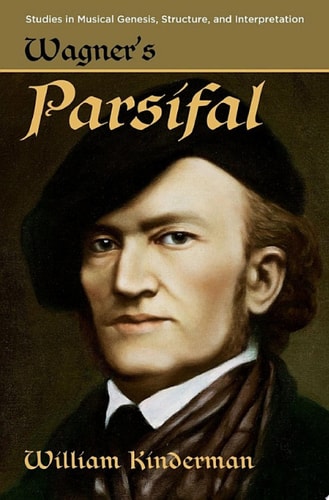
Wagner's Parsifal: Studies in Musical Genesis, Structure, and Interpretation
0
0
As an Amazon Associate and affiliate partner, Menrva Books earns from qualifying purchases. Learn more
Author Description
William Kinderman's detailed study of Parsifal, described by the composer as his "last card," explores the evolution of the text and music of this inexhaustible yet highly controversial music drama across Wagner's entire career. This book offers a reassessment of the ideological and political history of Parsifal, shedding new light on the connection of Wagner's legacy to the rise of National Socialism in Germany. The compositional genesis is traced through many unfamiliar manuscript sources, revealing unsuspected models and veiled connections to Wagner's earlier works. Fresh analytic perspectives are revealed, casting the dramatic meaning of Parsifal in a new light. Much debated aspects of the work, such as Kundry's death at the conclusion, are discussed in the context of its stage history.Path-breaking as well is Kinderman's analysis of the religious and ideological context of Parsifal. During the half-century after the composer's death, the Wagner family and the so-called Bayreuth circle sought to exploit Wagner's work for political purposes, thereby promoting racial nationalism and anti-Semitism. Hitherto unnoticed connections between Hitler and Wagner's legacy at Bayreuth are explored here, while differences between the composer's politics as an 1849 revolutionary and the later response of his family to National Socialism are weighed in a nuanced account. Kinderman combines new historical research, sensitive aesthetic criticism, and probing philosophical reflection in this most intensive examination of Wagner's culminating music drama.
Menrva's Summary
THE THESIS
This study investigates the complex compositional genesis, ideological implications, and historical reception of Richard Wagner's final music drama, Parsifal. William Kinderman, a scholar of music history, utilizes a combination of archival manuscript research, aesthetic analysis, and historical inquiry to re-evaluate the work's place in Wagner's career and its subsequent appropriation by political movements. The book argues that understanding the opera requires a nuanced separation of Wagner's original creative intent from the later, politically charged interpretations imposed by the Bayreuth circle.
THE SCOPE MAP
What You Will Find
- Analysis of primary manuscript sources and compositional sketches
- Examination of the ideological shift from Wagner's early revolutionary politics to later racial nationalism
- Historical documentation regarding the Bayreuth circle's influence on the work's legacy
- Comparative study of Parsifal in relation to Wagner's earlier operatic works
Scope Limits
- The text does not provide a comprehensive biography of Wagner's entire life
- It does not offer a general introduction to opera theory for non-specialists
THE AUTHORITY PERSPECTIVE
Scholars and musicologists frequently cite this work as a rigorous examination of the intersection between Wagnerian aesthetics and German political history. Readers often note the academic density of the prose, which is intended for those with a background in musicology or advanced historical studies.
Page Count:
338
Publication Date:
2018-01-01
Publisher:
Oxford University Press
ISBN-10:
0190623543
ISBN-13:
9780190623548
History
Music
Biography
Humanities
Musicology
Music History
Opera
Music Technology
Community Tags
Similar Books