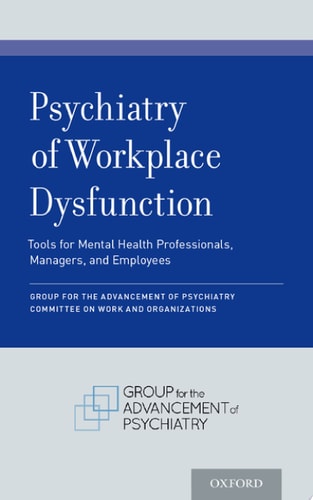
Psychiatry of Workplace Dysfunction: Tools for Mental Health Professionals, Managers, and Employees
0
0
As an Amazon Associate and affiliate partner, Menrva Books earns from qualifying purchases. Learn more
Author Description
Work is essential to healthy and adaptive human psychological functioning. The work ethic couples work and reward in order to endow work with meaning, and a healthy workplace supports relationships and behaviors that promote a strong work ethic and cohesive group function, therefore both accomplishing the overall goals of the workplace and enhancing the mental health of individual workers. Research has shown that attending to workplace relationships and engaging employees increases productivity, creativity, and loyalty, yielding both short-term and long-term benefits. Disruptions of these relationships can lead to significant impairment in performance and deterioration in workers' mental health. However, the tools that managers once relied upon to restore relationships have been weakened-in part because of technology, globalization, and litigation.Psychiatry of Workplace Dysfunction describes key drivers that disrupt the workplace environment and provides strategies and tools to address problematic behaviors and emotions that place the mental health of employees at risk and reduce the effectiveness of the organization. The principles discussed in this book are designed to foster high-functioning workplace relationships, and the authors' psychiatric training, coupled with the breadth of their collective years of business and legal consultation experience, offers unique wisdom about developing and sustaining a relationship-focused perspective at work. These insights integrate cutting-edge information with existing research and understanding of the psychological dynamics of the workplace-all clearly presented to speak to an audience of mental health professionals, managers, and employees alike.
Menrva's Summary
THE THESIS
This book investigates the psychological mechanisms behind workplace dysfunction and provides a framework for restoring healthy organizational dynamics. The authors, a committee from the Group for Advancement of Psychiatry, synthesize their clinical expertise with extensive experience in business and legal consultation. They argue that by prioritizing relationship-focused management, organizations can mitigate the negative impacts of globalization and technological shifts on employee mental health and productivity.
THE SCOPE MAP
What You Will Find
- Analysis of psychological drivers that disrupt workplace environments
- Strategies for addressing problematic behaviors and emotional volatility
- Frameworks for fostering high-functioning professional relationships
- Integration of psychiatric principles with organizational management theory
Scope Limits
- Does not provide legal advice or specific human resources policy templates
- Does not cover clinical treatment protocols for severe psychiatric disorders outside the workplace context
THE AUTHORITY PERSPECTIVE
Experts recognize this text as a bridge between clinical psychiatric practice and organizational management. Readers frequently note that the prose is accessible to both mental health professionals and corporate managers seeking to improve workplace culture.
Page Count:
176
Publication Date:
2017-12-19
Publisher:
Oxford University Press
ISBN-10:
0190697067
ISBN-13:
9780190697068
Psychology
Business
Management
Professional Development
Mental Health
Economic Theory
Community Tags
Similar Books