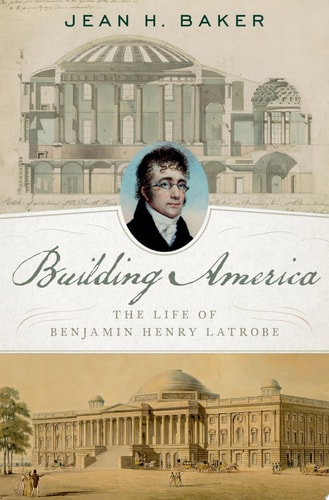
Building America: The Life of Benjamin Henry Latrobe
0
0
As an Amazon Associate and affiliate partner, Menrva Books earns from qualifying purchases. Learn more
Author Description
An English émigré who became America's first professional architect, Benjamin Henry Latrobe put his stamp on the built landscape of the new republic. Latrobe contributed to such iconic structures as the south wing of the US Capitol building, the White House, and the Navy Yard. He created some of the early republic's greatest neoclassical interiors, including the Statuary Hall and the Senate, House, and Supreme Court Chambers.As a young man, Latrobe was apprenticed to both a leading architect and civil engineer in London, studied the European continent's architectural and engineering monuments, worked on canals, and designed private houses. After the death of his first wife, he was bankrupt and emigrated to the United States in 1796 to restart his career. For the new nation with grand political expectations, he intended buildings and engineering projects to match those aspirations. Like his patron Thomas Jefferson, Latrobe saw his neoclassical designs as a way to convey American democracy. He envisioned his engineering projects, such as the canals and municipal water systems for Philadelphia and New Orleans, as a way to unite the nation and improve public health.Jean Baker conveys the personality of this charming, driven, and often frustrated genius and the era in which he lived. Latrobe tried to establish architecture as a profession with high standards, established fees, and recognized procedures, though he was unable to collect fees and earn the living his work was worth. Like many of his peers, he speculated and found himself in bankruptcy several times.Building America masterfully narrates the life and legacy of a key figure in creating an American aesthetic in the new United States.
Menrva's Summary
THE THESIS
How did Benjamin Henry Latrobe define the architectural and engineering identity of the early American republic? Historian Jean H. Baker examines the life of the immigrant architect who professionalized the field in the United States. Utilizing primary source documents and historical context, Baker argues that Latrobe’s neoclassical designs and ambitious infrastructure projects were intentional efforts to manifest the democratic ideals of the new nation.
THE SCOPE MAP
What You Will Find
- Biographical account of Latrobe’s life from his London apprenticeship to his career in America
- Analysis of major projects including the US Capitol, the White House, and municipal water systems
- Examination of the professionalization of architecture in the 18th and 19th centuries
Scope Limits
- Does not provide a comprehensive technical manual for Latrobe’s engineering methods
- Does not cover the entirety of the architectural history of the era beyond Latrobe’s direct influence
THE AUTHORITY PERSPECTIVE
Scholars and readers recognize this work as a definitive biographical study of a foundational figure in American architecture. The text is noted for its balanced approach to Latrobe’s professional triumphs and his personal financial struggles.
Page Count:
298
Publication Date:
2019-01-01
Publisher:
Oxford University Press
ISBN-10:
0190696478
ISBN-13:
9780190696474
Biography
Architecture
History
Non-Fiction
Biography Autobiography
Professional Career & Trade
Architects
United States
American History
English & College Success
English
Community Tags
Other Editions(2)

Similar Books