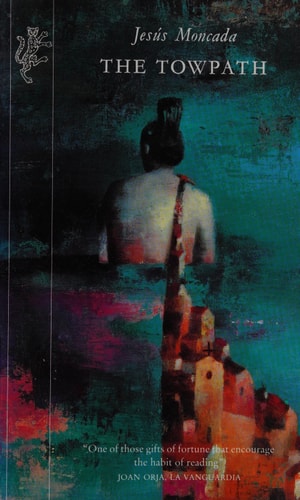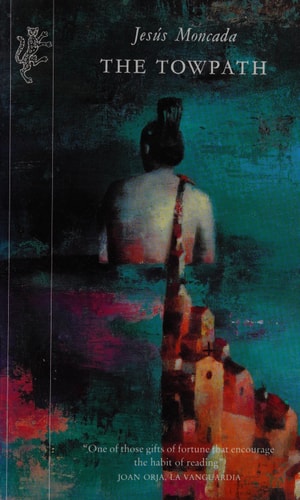
The Towpath
0
0
As an Amazon Associate and affiliate partner, Menrva Books earns from qualifying purchases. Learn more
Author Description
Until 1971 the town at the centre of this story was a river port at the confluence of the Ebro and the Segre. In its heyday the lower orders - coalminers, bargees, small tradesmen, the clientele of the Quayside Cafe - contributed to the life, vigour and prosperity of the town, while according proper deference to the upper crust - the mine-owners, the fleet-builders and landed proprietors who patronised the Casino de la Roda, kept their favoured pews in church and provided for the maintenance of the luscious chorus girls down at the Eden. There were halcyon years, as during the Great War, when the embattled Powers' insatiable demand for coal turned the place into a boom-town, and the Armistice was greeted as bad news. After that, the downhill slide began, hastened on by Anarchists and left-wingers who fomented trouble in the pits; then the Civil War and its attendant repression, which filled Franco's jails with all too many citizens. But Franco's repression was as nothing compared with the March of Progress in the shape of a hydro-electric scheme that was to leave the town under several fathoms of water. One by one the houses were pulled down in clouds of dust, the families moved to a newly built town, and only the grandest of the grandes dames, Senyora Carlota, refused to leave her mansion until carried out in her coffin.
Menrva's Summary
THE PULSE
The impending destruction of a river port town by a hydro-electric project forces its inhabitants to confront the erasure of their history and social identity. As the town faces its final days under the threat of submersion, the narrative captures the shifting dynamics between the working-class bargees and miners and the elite proprietors who once dominated the local hierarchy. Through a series of interconnected vignettes, the story documents the decline of a community from its boom-town prosperity during the Great War to the political turmoil of the Civil War and the eventual forced displacement of its residents. The narrative framework functions as a collective portrait, shifting focus across various social strata to illustrate the slow, inevitable dissolution of a way of life.
INSIDE THE PAGES
- Multi-perspective narrative structure capturing a wide array of town residents
- Detailed social stratification between the working class and the local elite
- Historical progression spanning from the Great War through the Franco era
- Focus on the physical and psychological impact of urban displacement
- Vivid depiction of the Quayside Cafe and the Casino de la Roda as social hubs
- Integration of political themes including Anarchism and Civil War repression
- Symbolic characterization of resistance through the figure of Senyora Carlota
- Atmospheric prose detailing the transition from a bustling port to a ghost town
THE COLLECTIVE ECHO
This work is regarded as a significant contribution to Catalan literature, noted for its ability to preserve the memory of a vanished landscape through precise, evocative prose. Readers often highlight the author's skill in balancing the intimate details of individual lives with the broader, often tragic, sweep of twentieth-century history. The narrative is frequently praised for its lack of sentimentality, opting instead for a clear-eyed examination of how progress and political upheaval dismantle community bonds. It stands as a testament to the power of fiction to act as a repository for local history that might otherwise be lost to the depths of a reservoir.
Page Count:
256
Publication Date:
1994-01-01
Publisher:
HarperCollins
ISBN-10:
0002730057
ISBN-13:
9780002730051
Literary Fiction
Historical Fiction
Spanish literature
Catalan
Regional
Social Realism
Spain fiction
Community Tags
Similar Books