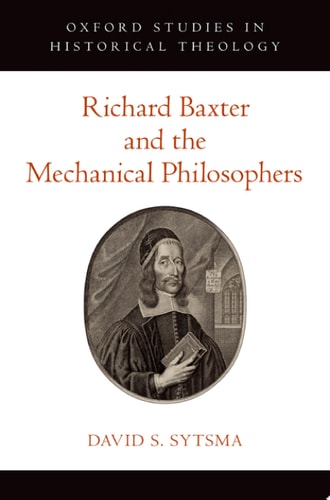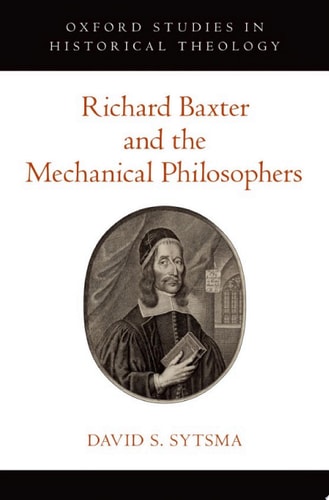
Richard Baxter and the Mechanical Philosophers (Oxford Studies in Historical Theology)
0
0
As an Amazon Associate and affiliate partner, Menrva Books earns from qualifying purchases. Learn more
Author Description
Richard Baxter, one of the most famous Puritans of the seventeenth century, is generally known as a writer of practical and devotional literature. But he also excelled in knowledge of medieval and early modern scholastic theology, and was conversant with a wide variety of seventeenth-century philosophies. Baxter was among the early English polemicists who wrote against the mechanical philosophy of René Descartes and Pierre Gassendi in the years immediately following the establishment of the Royal Society. At the same time, he was friends with Robert Boyle and Matthew Hale, corresponded with Joseph Glanvill, and engaged in philosophical controversy with Henry More. In this book, David Sytsma presents a chronological and thematic account of Baxter's relation to the people and concepts involved in the rise of mechanical philosophy in late-seventeenth-century England.Drawing on largely unexamined works, including Baxter's Methodus Theologiae Christianae (1681) and manuscript treatises and correspondence, Sytsma discusses Baxter's response to mechanical philosophers on the nature of substance, laws of motion, the soul, and ethics. Analysis of these topics is framed by a consideration of the growth of Christian Epicureanism in England, Baxter's overall approach to reason and philosophy, and his attempt to understand creation as an analogical reflection of God's power, wisdom, and goodness, or vestigia Trinitatis. Baxter's views on reason, analogical knowledge of God, and vestigia Trinitatis draw on medieval precedents and directly inform a largely hostile, though partially accommodating, response to mechanical philosophy.
Menrva's Summary
THE THESIS
This book investigates how the prominent Puritan theologian Richard Baxter engaged with and critiqued the emerging mechanical philosophy of the seventeenth century. David S. Sytsma, a scholar of historical theology, utilizes a combination of Baxter's published works, such as the Methodus Theologiae Christianae, and previously unexamined manuscript treatises and correspondence. The author argues that Baxter's theological framework, rooted in medieval scholasticism and the concept of vestigia Trinitatis, provided the basis for his complex, often critical, response to thinkers like Descartes and Gassendi.
THE SCOPE MAP
What You Will Find
- A chronological and thematic analysis of Baxter's interactions with Royal Society members including Robert Boyle and Henry More.
- Examination of seventeenth-century debates regarding substance, motion, the soul, and ethics.
- Discussion of the rise of Christian Epicureanism in England.
Scope Limits
- The study focuses specifically on Baxter's intellectual output and correspondence rather than a comprehensive biography of his life.
- The analysis is restricted to the late-seventeenth-century context of English mechanical philosophy.
THE AUTHORITY PERSPECTIVE
Scholars recognize this work as a significant contribution to the study of Puritan intellectual history and the intersection of theology and early modern science. Readers frequently note the academic density of the prose and the author's meticulous use of primary source material to reframe Baxter's philosophical contributions.
Page Count:
352
Publication Date:
2017-01-01
Publisher:
Oxford University Press
ISBN-10:
0190695382
ISBN-13:
9780190695385
History
Religion
Philosophy
Intellectual History
Puritanism
Theology
Seventeenth Century
Community Tags
Similar Books