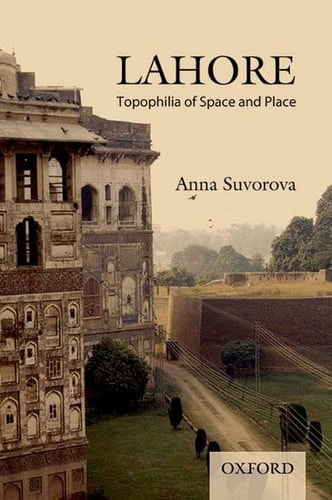
Lahore: Topophilia of Space and Place
0
0
As an Amazon Associate and affiliate partner, Menrva Books earns from qualifying purchases. Learn more
Author Description
The book is a reconstruction of the historical and cultural images of Lahore, one of the oldest cities in the Indian Subcontinent. The author has chosen an interdisciplinary approach that combines the studies in cultural anthropology, literary and historical sources, art history and humanistic geography. The central point of the analysis is topophilia (lit. love of place), the term used to describe the strong sense of place or identity among certain peoples and groups. In the present book, the topophilia of Lahore is represented through interrelations of different types of urban locations, landscapes, architecture and artefacts on the one hand and human attitudes, rituals and manners and customs on the other. The author's aim is to show how the historical and cultural developments of people build up the cultural landscape of the city and how the geographical place and space, in their turn, influence the behaviour and identity of Lahore's citizens.
Menrva's Summary
THE THESIS
This work investigates how the concept of topophilia—the affective bond between people and their environment—shapes the historical and cultural identity of Lahore. Anna A. Suvorova, a scholar specializing in South Asian culture, utilizes an interdisciplinary framework to examine the city. By synthesizing literary sources, anthropological data, and architectural history, she argues that the urban landscape of Lahore is a reciprocal construct formed by both physical geography and the collective behaviors of its inhabitants.
THE SCOPE MAP
What You Will Find
- Analysis of the historical and cultural evolution of Lahore as a major South Asian urban center.
- Application of the topophilia framework to urban planning and social rituals.
- Examination of the interplay between physical artifacts, architecture, and human customs.
Scope Limits
- The text does not provide a comprehensive political history of the region.
- It does not focus on contemporary economic development or modern urban infrastructure projects.
THE AUTHORITY PERSPECTIVE
Scholars and urban historians frequently cite this work for its unique synthesis of humanistic geography and cultural anthropology. Experts highlight the text as a valuable resource for understanding the symbolic and emotional dimensions of urban spaces in the Indian Subcontinent.
Page Count:
272
Publication Date:
2022-12-19
Publisher:
Oxford University Press
ISBN-10:
0190706457
ISBN-13:
9780190706456
Politics
History
Cultural Anthropology
India
Humanistic Geography
Urban Studies
Educational Resources
Art History
Asia
Asian Studies
Pakistan
Community Tags
Similar Books