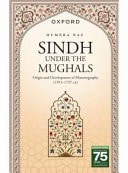
Sindh under the Mughals: Origin and Development of Historiography (1591-1737 CE)
0
0
As an Amazon Associate and affiliate partner, Menrva Books earns from qualifying purchases. Learn more
Author Description
The book is a fount of knowledge regarding the historiography-and thus the history itself-of Sindh in the late medieval and early modern eras. It takes us on board to witness its repeated invasions; the development of its resilient Sufic tradition and its Arab/Persian literature; and its rule and misrule by successive foreign dynasties leading up to the mighty Mughals themselves. We also learn of Mughal India's interaction with neighbouring Safavid Persia and Ottoman Turkey. All this is transmitted to us through the chronicles of courtiers, diplomats, military commanders, scholars, Sufis, and poets who were contemporaries of that period. It discusses the emergence of new historiographical trends under the Mughal rule in Sindh which gradually strengthened and crystallized in the field of knowledge and scholarly activities.
Menrva's Summary
THE THESIS
This work investigates the evolution of historiographical practices in Sindh during the period of Mughal administration between 1591 and 1737 CE. Humera Naz, a scholar specializing in regional history, utilizes a wide array of primary source chronicles to analyze how political shifts influenced the recording of history. The book argues that the Mughal presence catalyzed specific intellectual trends, transforming how local events, Sufi traditions, and diplomatic relations were documented by contemporary observers.
THE SCOPE MAP
What You Will Find
- Analysis of historical chronicles authored by diplomats, military commanders, and scholars.
- Examination of the intersection between Mughal governance and local Sufi traditions.
- Comparative study of interactions between Mughal India, Safavid Persia, and Ottoman Turkey.
- Documentation of the development of Arab and Persian literary traditions in the region.
Scope Limits
- The study is strictly confined to the period between 1591 and 1737 CE.
- The focus remains primarily on historiographical development rather than a comprehensive socio-political biography of the region.
THE AUTHORITY PERSPECTIVE
Scholars in the field of South Asian history recognize this text as a specialized contribution to the study of regional historiography under imperial rule. Readers frequently note the academic density of the prose and the author's meticulous reliance on contemporary primary sources.
Page Count:
280
Publication Date:
2024-01-01
Publisher:
Oxford University Press
ISBN-10:
0190701285
ISBN-13:
9780190701284
History
Historiography
Sindh
Asian History
Mughal Empire
Asia history
Community Tags
Similar Books