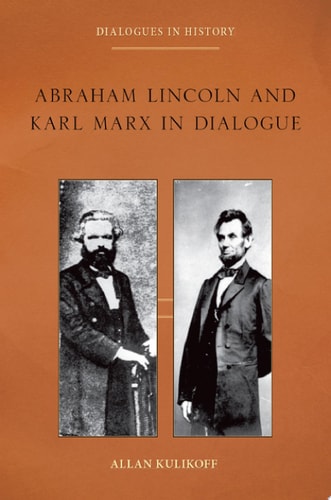
Abraham Lincoln and Karl Marx in Dialogue
0
0
As an Amazon Associate and affiliate partner, Menrva Books earns from qualifying purchases. Learn more
Author Description
Why Put Abraham Lincoln, The Sometime Corporate Lawyer And American President, In Dialogue With Karl Marx, The Intellectual Revolutionary? On The Surface, They Would Appear To Share Few Interests. Yet, Though Lincoln And Marx Never Met One Another, Both Had An Abiding Interest In The Most Important Issue Of The Nineteenth-century Atlantic World-the Condition Of Labor In A Capitalist World, One That Linked Slave Labor In The American South To England's (and Continental Europe's) Dark Satanic Mills. Each Sought Solutions--lincoln Through A Polity That Supported Free Men, Free Soil, And Free Labor; Marx By Organizing The Working Class To Resist Capitalist Exploitation. While Both Men Espoused Emancipation For American Slaves, Here Their Agreements Ended. Lincoln Thought That The Free Labor Society Of The American North Provided Great Opportunities For Free Men Missing From The American South, A Kind Of Farm Ladder That Gave Every Man The Ability To Become A Landowner. Marx Thought Such Free Land A Chimera And (with Information From German-american Correspondents), Was Certain That The American Future Lay In The Proletarianized Cities. Abraham Lincoln And Karl Marx In Dialogue Intersperses Short Selections From The Two Writers From Their Voluminous Works, Opening With An Introduction That Puts The Ideas Of The Two Men In The Broad Context Of Nineteenth-century Thought And Politics. The Volume Excerpts Lincoln's And Marx's Views On Slavery (they Both Opposed It For Different Reasons), The Civil War (marx Claimed The War Concerned Slavery And Should Have As Its Goal Abolition; Lincoln Insisted That His Goal Was Just The Defeat Of The Confederacy), And The Opportunities American Free Men Had To Gain Land And Economic Independence. Through This Volume, Readers Will Gain A Firmer Understanding Of Nineteenth-century Labor Relations Throughout The Atlantic World: Slavery And Free Labor; The Interconnections Between Slave-made Cotton And The Exploitation Of English Proletarians
Menrva's Summary
THE THESIS
This work investigates the ideological intersections and divergences between Abraham Lincoln and Karl Marx regarding the nature of labor, capitalism, and slavery in the 19th-century Atlantic world. Allan Kulikoff, a historian specializing in American social and economic history, utilizes a comparative framework to analyze how these two figures addressed the systemic conditions of labor. By juxtaposing their writings, the author examines how Lincoln’s vision of free labor and land ownership contrasted with Marx’s analysis of proletarianization and class struggle.
THE SCOPE MAP
What You Will Find
- Comparative analysis of 19th-century labor relations and economic systems.
- Excerpts from the primary writings of both Abraham Lincoln and Karl Marx.
- Contextualization of the American Civil War within global capitalist development.
Scope Limits
- The text does not provide a comprehensive biography of either figure.
- It does not explore the personal lives of the subjects beyond their political and economic thought.
THE AUTHORITY PERSPECTIVE
Scholars and students of political history often utilize this volume as a concise introduction to the comparative study of 19th-century economic ideologies. Readers frequently note that the text provides a clear, accessible entry point into complex debates regarding the transition from slave labor to industrial capitalism.
Page Count:
160
Publication Date:
2017-01-01
Publisher:
Oxford University Press
ISBN-10:
0190844655
ISBN-13:
9780190844653
Biography
Philosophy
History
Labor Studies
19th Century
Community Tags
Other Editions(2)
Similar Books




Reader Comments
Share Your Thoughts
No comments yet. Be the first to share your thoughts!