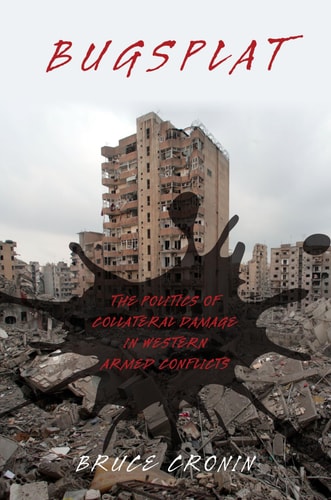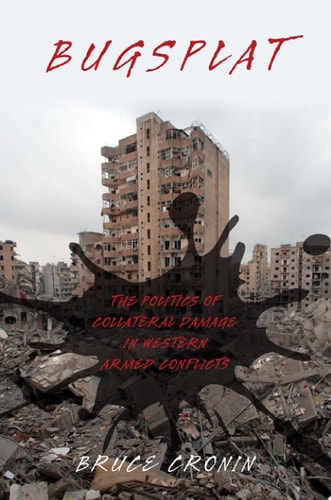
Bugsplat: The Politics of Collateral Damage in Western Armed Conflicts
0
0
As an Amazon Associate and affiliate partner, Menrva Books earns from qualifying purchases. Learn more
Author Description
Why do states who are committed to the principle of civilian immunity and the protection of non-combatants end up killing and injuring large numbers of civilians during their military operations? Bugsplat explains this paradox through an in-depth examination of five conflicts fought by Western powers since 1989. It argues that despite the efforts of Western military organizations to comply with the laws of armed conflict, the level of collateral damage produced by Western military operations is the inevitable outcome of the strategies and methods through which their military organizations fight wars. Drawing on their superior technology and the strategic advantage of not having to fight on their own territory, such states employ highly-concentrated and overwhelming military force against a wide variety of political, economic, and military targets under conditions likely to produce high civilian casualties. As a result, collateral damage in western-fought wars is largely both foreseeable and preventable. The book title is derived from the name of a computer program that had been used by the Pentagon to calculate probable civilian casualties prior to launching air attacks.
Menrva's Summary
THE THESIS
This book investigates the paradox of why Western states committed to civilian immunity consistently cause significant collateral damage during military operations. Bruce Cronin, a professor of political science, utilizes a structural analysis of military doctrine and technological reliance to argue that civilian casualties are an inherent byproduct of modern Western warfare strategies rather than mere accidental anomalies. He posits that the systematic application of overwhelming force against diverse target sets creates a predictable environment where non-combatant harm is statistically inevitable.
THE SCOPE MAP
What You Will Find
- Analysis of five specific conflicts involving Western powers since 1989
- Examination of the 'Bugsplat' software and its role in military targeting calculations
- Evaluation of the tension between international humanitarian law and military operational methods
Scope Limits
- Does not provide a comprehensive history of all Western military engagements since 1989
- Does not focus on the psychological motivations of individual soldiers or commanders
THE AUTHORITY PERSPECTIVE
Experts recognize this work as a critical contribution to the study of military ethics and the structural failures of modern warfare. Readers frequently note the academic rigor of the prose and the clarity with which the author connects high-level policy decisions to tangible humanitarian outcomes.
Page Count:
190
Publication Date:
2018-04-04
Publisher:
Oxford University Press
ISBN-10:
019084910X
ISBN-13:
9780190849108
Warfare
Ethics
International Security
Military History
Protection of civilians
War Victims
International relations
War Philosophy