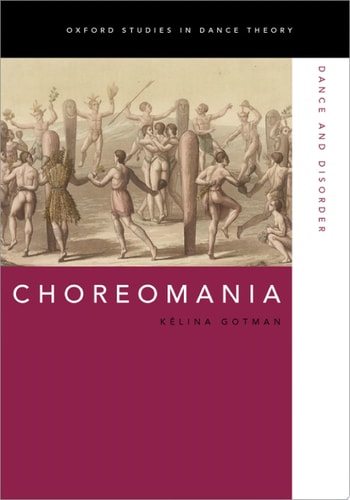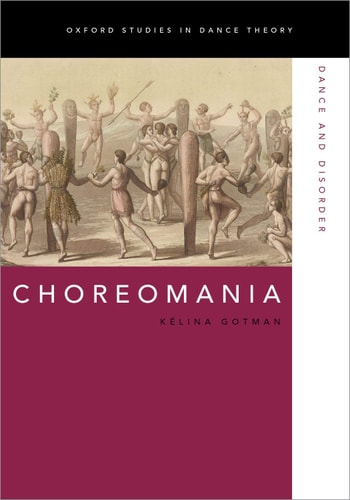
Choreomania: Dance and Disorder
0
0
As an Amazon Associate and affiliate partner, Menrva Books earns from qualifying purchases. Learn more
Author Description
When political protest is read as epidemic madness, religious ecstasy as nervous disease, and angular dance moves as dark and uncouth, the 'disorder' being described is choreomania. At once a catchall term to denote spontaneous gestures and the unruly movements of crowds, 'choreomania' emerged in the nineteenth century at a time of heightened class conflict, nationalist policy, and colonial rule. In this book, author Kélina Gotman examines these choreographies of unrest, rethinking the modern formation of the choreomania concept as it moved across scientific and social scientific disciplines. Reading archives describing dramatic misformations-of bodies and body politics-she shows how prejudices against expressivity unravel, in turn revealing widespread anxieties about demonstrative agitation. This history of the fitful body complements stories of nineteenth-century discipline and regimentation. As she notes, constraints on movement imply constraints on political power and agency. In each chapter, Gotman confronts the many ways choreomania works as an extension of discourses shaping colonialist orientalism, which alternately depict riotous bodies as dangerously infected others, and as curious bacchanalian remains. Through her research, Gotman also shows how beneath the radar of this colonial discourse, men and women gathered together to repossess on their terms the gestures of social revolt.
Menrva's Summary
THE THESIS
This book investigates how the concept of 'choreomania'—or epidemic dance disorder—was constructed and utilized within nineteenth-century scientific and social discourse to pathologize political and social unrest. Kélina Gotman, a scholar in dance theory and performance studies, utilizes archival research to analyze how descriptions of unruly movement were weaponized to suppress agency and reinforce colonialist and nationalist power structures. She argues that the labeling of spontaneous physical expression as a disease served as a mechanism for discipline and the marginalization of perceived 'others.'
THE SCOPE MAP
What You Will Find
- Analysis of nineteenth-century medical and social scientific archives regarding 'choreomania.'
- Examination of the intersection between movement, political protest, and colonialist orientalism.
- Theoretical framework linking physical discipline to the regulation of political power.
Scope Limits
- The text focuses primarily on the nineteenth-century formation of the concept and does not provide a comprehensive history of dance performance itself.
THE AUTHORITY PERSPECTIVE
Scholars in the fields of dance studies and cultural history recognize this work as a rigorous examination of how bodily movement is politicized. Readers frequently note the academic density of the prose, which is intended for an audience familiar with critical theory and historical analysis.
Page Count:
384
Publication Date:
2018-01-11
Publisher:
Oxford University Press
ISBN-10:
0190840420
ISBN-13:
9780190840426
History
Choreography
Dance
Anthropology
Dance Theory
Sociology