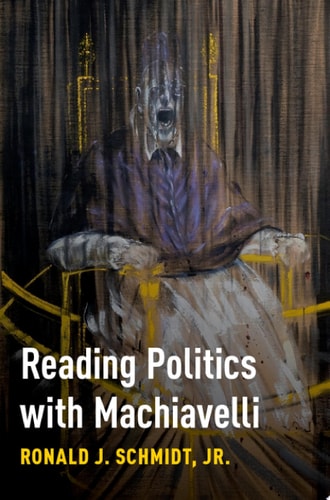
Reading Politics With Machiavelli
0
0
As an Amazon Associate and affiliate partner, Menrva Books earns from qualifying purchases. Learn more
Author Description
Political Theorist Wendy Brown Has Argued Recently That Contemporary Neoliberalism, With Its Relentless Obsession On The Economy, Has All But Undone The Tenets Of Democracy. The Focus On Maximizing Credit Scores And Capital Has, Over Time, Promoted A Politics That Operates Beyond And Below The Institutional And Electoral World, Eroding Not Just The Desire For Democratic Action But Even Our Ability To Imagine It. In Light Of Recent Politics, It Seems We May Have Reached The Apotheosis Of This Depressing Vision. This Book Is Meant To Suggest One Way Of Thinking Past And Out Of The Current Moment, And It Does So By Looking To A Perhaps Unlikely Figure: Niccolo Machiavelli. The Book Presents Machiavelli As An Anachronistic Thinker -- A Thinker Who, Deprived Of His Political Community And Public Identity During His Exile From Florence, Originated A New Approach To Democratic Theory And Practice. In Particular He Immersed Himself In The Writings Of Ancient Thinkers And Looked To Them As Models For Understanding Contemporary Problems Of Corruption, Conspiracy, And Torture. This Book's Main Contribution Is A Methodological One: It Argues That The Power In Machiavelli's Work Derived From This Sort Of Anachronistic Reading, Which Went Against The Grain Of Renaissance Thought. In Turn It Shows That If We Imitate Machiavelli's Interpretive Method In Reading The Prince And Discourses Of Livy, We Can Find In Them Solutions To The Neoliberal Problems Brown Warns About.
Menrva's Summary
THE THESIS
Can the interpretive methods of Niccolo Machiavelli provide a framework for overcoming the democratic erosion caused by contemporary neoliberalism? Ronald J. Schmidt, Jr. examines Machiavelli not as a historical relic, but as an anachronistic thinker whose exile-driven engagement with ancient texts offers a blueprint for modern political resistance. By analyzing how Machiavelli utilized classical models to address corruption and institutional decay, the author proposes a methodology for re-imagining democratic practice in an era dominated by economic metrics and neoliberal constraints.
THE SCOPE MAP
What You Will Find
- A methodological analysis of Machiavelli's reading practices in The Prince and Discourses on Livy.
- A critique of neoliberalism's impact on democratic imagination and institutional integrity.
- An application of Renaissance political theory to contemporary issues like corruption and state-sanctioned violence.
Scope Limits
- The text does not provide a comprehensive history of Renaissance political thought beyond its relevance to the author's specific methodological argument.
- It does not offer a policy-based manual for electoral reform, focusing instead on the theoretical and interpretive approach to political engagement.
THE AUTHORITY PERSPECTIVE
Scholars and political theorists frequently note the book's focus on methodological innovation as a bridge between classical political philosophy and modern critique. Experts highlight this as a useful text for those seeking to apply historical political theory to the specific challenges posed by neoliberal governance.
Page Count:
208
Publication Date:
2018-01-01
Publisher:
Oxford University Press
ISBN-10:
0190843365
ISBN-13:
9780190843366
Philosophy
History
Neoliberalism
Political Theory
Community Tags
Similar Books