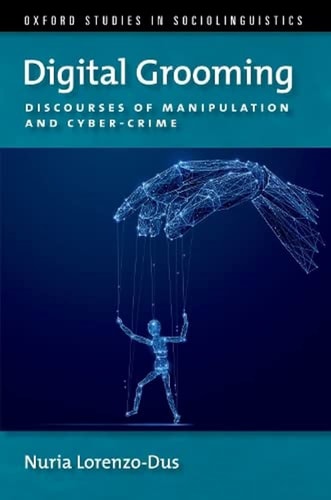
Digital Grooming: Discourses of Manipulation and Cyber-Crime
0
0
As an Amazon Associate and affiliate partner, Menrva Books earns from qualifying purchases. Learn more
Author Description
Illicit digital activity is a substantial and growing problem. Extremists' use of social media over the past decade or so has raised increasing concern among governments and media corporations alike. In Digital Grooming Nuria Lorenzo-Dus analyzes manipulation practices in digital spaces that are situated at, or beyond, the boundaries of law. Lorenzo-Dus identifies and examines in detail the online discourse of adults luring children for sexual abuse and exploitation (digital sexual grooming); extreme ideology groups aligning others to their views (digital ideological grooming); and drug dealers soliciting business in crypto markets (digital commercial grooming). With sophisticated style and stance analyses of large and varied datasets, the book reveals that digital sexual, ideological, and commercial grooming practices have much in common. Three stances--expertise, openness, and avidity--scaffold this manipulative work, which constructs groomers and their targets as sharing a homogenous identity.By shedding new light on grooming practices, this book provides a key resource for discourse analysis, forensic linguistics, communication, and media studies, as well as for practitioners aiming to counter online grooming through policy changes, detection software, and prevention-focused training to promote digital civility and safety.
Menrva's Summary
THE THESIS
This book investigates the linguistic mechanisms of manipulation used by illicit actors to groom targets within digital environments. Nuria Lorenzo-Dus, a scholar in discourse analysis, utilizes a framework of style and stance analysis to examine how groomers construct shared identities with their targets. By analyzing large datasets, she argues that sexual, ideological, and commercial grooming share common communicative strategies that facilitate exploitation.
THE SCOPE MAP
What You Will Find
- Comparative analysis of digital sexual, ideological, and commercial grooming practices
- Application of stance analysis focusing on expertise, openness, and avidity
- Examination of discourse patterns in crypto markets and social media platforms
Scope Limits
- The book does not provide a comprehensive legal guide for prosecution
- It does not offer technical software engineering specifications for detection tools
THE AUTHORITY PERSPECTIVE
Experts in forensic linguistics and communication studies identify this work as a significant contribution to understanding the communicative architecture of online manipulation. Readers frequently note the academic density of the prose, which serves as a rigorous resource for both scholars and practitioners in digital safety.
Page Count:
272
Publication Date:
2022-12-30
Publisher:
Oxford University Press
ISBN-10:
019084518X
ISBN-13:
9780190845186
Linguistics
Forensic Linguistics
Cybercrime
Social Science
Communication Studies
Digital Media