Capital Women
0
0
As an Amazon Associate and affiliate partner, Menrva Books earns from qualifying purchases. Learn more
Author Description
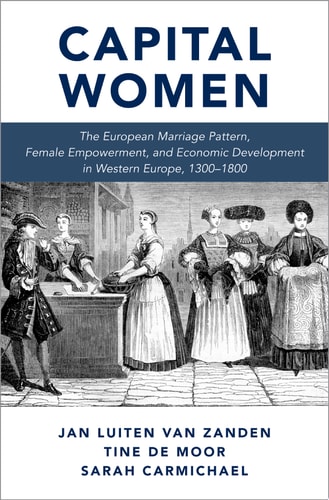
How Women Increasingly Became Economic Agents In Early Modern Europe Is The Focus Of This Stimulating Book, Which Highlights How Female Agency Was Crucial For Understanding The Development Of The Western European Economy And Sheds Light On Economic Development Today. Jan Luiten Van Zanden, Tine De Moor And Sarah Carmichael Argue That Over Centuries A European Marriage Pattern Developed, Characterized By High Numbers Of Singles Among Men And Women, High Marriage Ages Among Men And Women, And Neolocality, Where The Couple Forms A New Nuclear Household And Did Not Co-reside With The Parents Of Either Bride Or Groom. This Was Due To The Influence Of The Catholic Church's Teachings Of Marriage Based On Consensus, The Rise Of Labor Markets, And Institutions Concerning Property Transfers Between Generations That Enhanced Wage Labor By Women. Over Time An Unprecedented Demographic Regime Was Created And Embedded In A Highly Commercial Environment In Which Households Interacted Frequently With Labor, Capital And Commodity Markets. This Was One Of The Main Causes Of The Gradual Move Away From A Malthusian State Towards An Economy Able To Generate Long-term Economic Growth. The Authors Explore How The Pattern Was Influenced By And Influenced Female Human Capital Formation, Access To The Capital Market, And Participation In The Labor Market. They Use Numerous Measures Of Economic Activity, Including The Unique Girlpower-index That Measures The Average Age At First Marriage Of Women Minus The Spousal Age Gap, With Higher Absolute Age At Marriage And Lower Spousal Age Gap Both Indicating Greater Female Agency And Autonomy. The Book Also Examines How This Measure Can Increase Understanding Of Contemporary Dynamics Of Women And The Economy. The Authors Thus Shed Light On The Degree To Which Women Are Allowed To Play An Influential Role In And On The Economy And Society, Which Varies Greatly From One Society To Another.
Menrva's Summary
THE THESIS
This book investigates how the increasing economic agency of women in early modern Europe served as a critical driver for the development of the Western European economy and long-term growth. The authors, Jan Luiten van Zanden, Tine De Moor, and Sarah Carmichael, utilize historical demographic data and institutional analysis to argue that the emergence of a specific 'European marriage pattern' facilitated female participation in labor and capital markets. By examining the intersection of religious doctrine, property rights, and household formation, they present a framework that links female autonomy to the transition away from Malthusian economic constraints.
THE SCOPE MAP
What You Will Find
- Analysis of the European marriage pattern characterized by high marriage ages and neolocality.
- The Girlpower-index as a quantitative tool to measure female agency and autonomy.
- Examination of the influence of Catholic Church teachings on marriage consensus and property transfer.
- Comparative study of labor market participation and human capital formation across centuries.
Scope Limits
- The study focuses primarily on Western European economic development and may not apply to non-Western demographic regimes.
- The analysis is restricted to the early modern period and its direct implications for contemporary economic dynamics.
THE AUTHORITY PERSPECTIVE
Experts recognize this work as a significant contribution to the field of economic history, particularly for its innovative use of quantitative indices to track social change. Readers frequently note the academic density of the prose, which requires a foundational understanding of economic theory and historical methodology to fully appreciate the authors' arguments.
Page Count:
304
Publication Date:
2019-01-01
Publisher:
Oxford University Press
ISBN-10:
0190847891
ISBN-13:
9780190847890
Economics
History
European History
Economic History
Gender Studies
Sociology
Community Tags
Similar Books