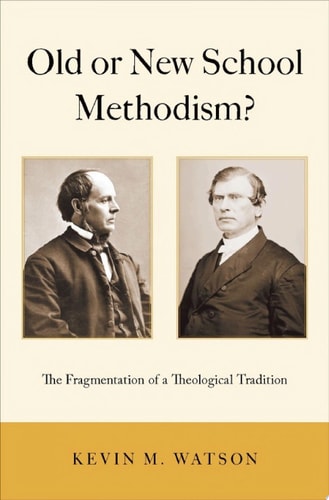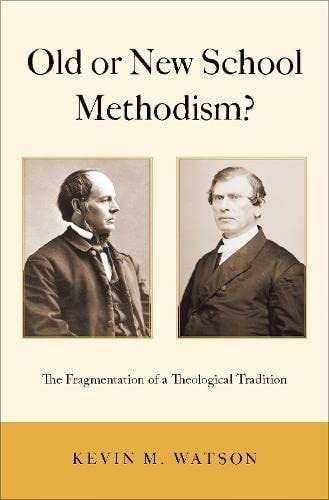
Old or New School Methodism: The Fragmentation of a Theological Tradition
0
0
As an Amazon Associate and affiliate partner, Menrva Books earns from qualifying purchases. Learn more
Author Description
On September 7, 1881, Matthew Simpson, Bishop in the Methodist Episcopal Church, in a London sermon asserted that, "As to the divisions in the Methodist family, there is little to mar the family likeness." Nearly a quarter-century earlier, Benjamin Titus (B.T.) Roberts, a minister in the same branch of Methodism as Simpson, had published an article titled in the Northern Independent in which he argued that Methodism had split into an "Old School" and "New School." He warned that if the new school were to "generally prevail," then "the glory will depart from Methodism." As a result, Roberts was charged with "unchristian and immoral conduct" and expelled from the Genesee Conference of the Methodist Episcopal Church (MEC).Old or New School Methodism? examines how less than three decades later Matthew Simpson could claim that the basic beliefs and practices that Roberts had seen as threatened were in fact a source of persisting unity across all branches of Methodism. Kevin M. Watson argues that B. T. Roberts's expulsion from the MEC and the subsequent formation of the Free Methodist Church represent a crucial moment of transition in American Methodism. This book challenges understandings of American Methodism that emphasize its breadth and openness to a variety of theological commitments and underemphasize the particular theological commitments that have made it distinctive and have been the cause of divisions over the past century and a half. Old or New School Methodism? fills a major gap in the study of American Methodism from the 1850s to 1950s through a detailed study of two of the key figures of the period and their influence on the denomination.
Menrva's Summary
THE THESIS
This book investigates the theological and institutional schism within 19th-century American Methodism, specifically questioning how the movement reconciled its internal divisions regarding doctrine and practice. Kevin M. Watson, a scholar of Methodist history, utilizes primary source documents, including the writings of B.T. Roberts and Bishop Matthew Simpson, to analyze the transition from a unified tradition to a fragmented denomination. The work argues that the expulsion of Roberts and the subsequent formation of the Free Methodist Church serve as a critical case study for understanding the theological boundaries that defined the Methodist identity during this era.
THE SCOPE MAP
What You Will Find
- Analysis of the conflict between the 'Old School' and 'New School' Methodist factions.
- Examination of the trial and expulsion of B.T. Roberts from the Genesee Conference.
- Historical assessment of the Methodist Episcopal Church from the 1850s to the 1950s.
- Comparative study of the theological priorities held by Matthew Simpson and B.T. Roberts.
Scope Limits
- The study focuses primarily on the American context of Methodism rather than global developments.
- The narrative does not provide an exhaustive history of all Methodist offshoots, concentrating instead on the specific tension between the MEC and the Free Methodist Church.
THE AUTHORITY PERSPECTIVE
Scholars and historians of American religion recognize this text as a significant contribution to understanding the internal mechanics of 19th-century denominational splits. Readers frequently note the academic rigor and the clarity with which the author navigates complex theological disputes.
Page Count:
312
Publication Date:
2019-04-02
Publisher:
Oxford University Press
ISBN-10:
0190844515
ISBN-13:
9780190844516
History
Religion
Methodism
Christian Theology
Church History
Methodist Church
Community Tags
Similar Books