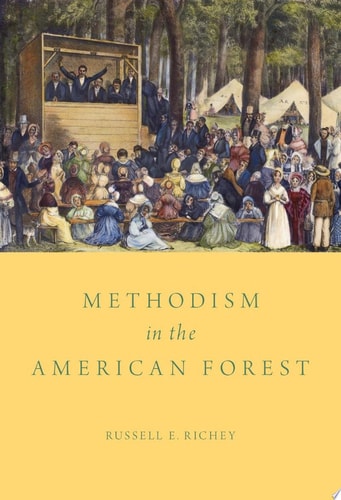
Methodism in the American Forest
0
0
As an Amazon Associate and affiliate partner, Menrva Books earns from qualifying purchases. Learn more
Author Description
Winner of the 2015 Saddleback Selection Award from the Historical Society of The United Methodist ChurchDuring the nineteenth century, camp meetings became a signature program of American Methodists and an extraordinary engine for their remarkable evangelistic outreach. Methodism in the American Forest explores the ways in which Methodist preachers interacted with and utilized the American woodland, and the role camp meetings played in the denomination's spread across the country. Half a century before they made themselves such a home in the woods, the people and preachers learned the hard way that only a fool would adhere to John Wesley's mandate for preaching in fields of the New World. Under the blazing American sun, Methodist preachers sought and found a better outdoor sanctuary for large gatherings: under the shade of great oaks, a natural cathedral where they held forth with fervid sermons. The American forests, argues Russell E. Richey, served the preachers in several important ways. Like a kind of Gethesemane, the remote, garden-like solitude provided them with a place to seek counsel from the Holy Spirit. They also saw the forest as a desolate wilderness, and a means for them to connect with Israel's years after the Exodus and Jesus's forty days in the desert after his baptism by John. The dauntless preachers slashed their way through, following America's expanding settlement, and gradually sacralizing American woodlands as cathedral, confessional, and spiritual challenge-as shady grove, as garden, and as wilderness. The threefold forest experience became a Methodist standard. The meeting of Methodism's basic governing body, the quarterly conference, brought together leadership of all levels. The event stretched to two days in length and soon great crowds were drawn by the preaching and eventually the sacraments that were on offer. Camp meetings, if not a Methodist invention, became the movement's signature, a development that Richey tracks throughout the y
Menrva's Summary
THE THESIS
This work investigates how the American forest functioned as a critical environmental and theological space for the expansion of nineteenth-century Methodism. Russell E. Richey, a scholar of Methodist history, utilizes archival records and historical accounts to argue that the woodland environment was not merely a backdrop but an active participant in the denomination's evangelistic success. He posits that preachers transformed the wilderness into a sacred space, utilizing it as a cathedral, a confessional, and a site for spiritual testing that mirrored biblical narratives.
THE SCOPE MAP
What You Will Find
- Analysis of the nineteenth-century American camp meeting movement.
- Examination of the theological symbolism of the forest in Methodist thought.
- Historical documentation of the quarterly conference and its role in church governance.
- Exploration of the intersection between frontier expansion and religious practice.
Scope Limits
- The text focuses primarily on the American context and does not provide a comprehensive global history of Methodism.
- It does not cover the theological evolution of Methodism beyond the nineteenth-century frontier experience.
THE AUTHORITY PERSPECTIVE
Scholars and historians of American religion recognize this text as a significant contribution to the understanding of how environmental factors shaped denominational growth. Readers frequently note the academic rigor and the specific focus on the intersection of geography and theology in the Methodist tradition.
Page Count:
240
Publication Date:
2015-01-01
Publisher:
Oxford University Press
ISBN-10:
0190266562
ISBN-13:
9780190266561
History
Religion
Preaching
Christianity
American History
Forests and forestry
Camp Meetings
Church History
Methodist Church
Methodism
Community Tags
Other Editions(3)

Similar Books




Reader Comments
Share Your Thoughts
No comments yet. Be the first to share your thoughts!