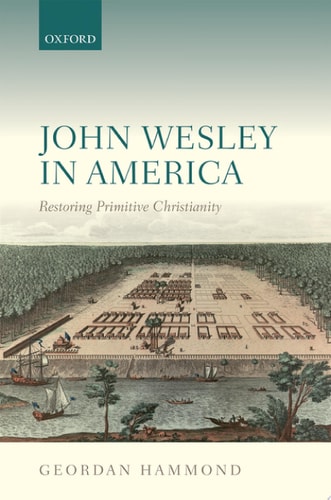
John Wesley in America: Restoring Primitive Christianity
0
0
As an Amazon Associate and affiliate partner, Menrva Books earns from qualifying purchases. Learn more
Author Description
Why did John Wesley leave the halls of academia at Oxford to become a Church of England missionary in the newly established colony of Georgia? Was his ministry in America a success or failure? These questions-which have engaged numerous biographers of Wesley-have often been approached from the vantage point of later developments in Methodism. Geordan Hammond presents the first book-length study of Wesley's experience in America, providing an innovative contribution to debates about the significance of a formative period of Wesley's life. John Wesley in America addresses Wesley's Georgia mission in fresh perspective by interpreting it in its immediate context. In order to re-evaluate this period of Wesley's life, Hammond carefully considers Wesley's writings and those of his contemporaries. The Georgia mission, for Wesley, was a laboratory for implementing his views of primitive Christianity. The ideal of restoring the doctrine, discipline, and practice of the early church in the pristine Georgia wilderness was the prime motivating factor in Wesley's decision to embark for Georgia and in his clerical practice in the colony. Understanding the centrality of primitive Christianity to Wesley's thinking and pastoral methods is essential to comprehending his experience in America. Wesley's conception of primitive Christianity was rooted in his embrace of patristic scholarship at Oxford. The most direct influence, however, was the High Church ecclesiology of the Usager Nonjurors who inspired him with their commitment to the restoration of the primitive church.
Menrva's Summary
THE THESIS
This book investigates the motivations and outcomes of John Wesley's missionary work in Georgia, specifically questioning whether his ministry was a success or failure when viewed through the lens of his commitment to primitive Christianity. Geordan Hammond, a scholar of Methodist history, utilizes primary source documents including Wesley's own writings and those of his contemporaries to re-evaluate this formative period. The author argues that the Georgia mission served as a laboratory for Wesley to implement his High Church ecclesiology and his desire to restore the doctrine, discipline, and practice of the early church.
THE SCOPE MAP
What You Will Find
- An analysis of Wesley's Georgia mission within its immediate historical context
- Examination of the influence of patristic scholarship and the Usager Nonjurors on Wesley's theology
- A detailed look at the intersection of clerical practice and colonial wilderness conditions
Scope Limits
- The book does not focus on the later developments of Methodism in England or America
- It does not provide a comprehensive biography of Wesley's entire life
THE AUTHORITY PERSPECTIVE
Scholars and historians recognize this work as a significant contribution to the study of Wesley's early life, specifically for its focus on the intellectual roots of his mission. Readers frequently note the academic rigor and the depth of the archival research presented throughout the text.
Page Count:
256
Publication Date:
2014-01-01
Publisher:
OUP Oxford
ISBN-10:
0191005126
ISBN-13:
9780191005121
History
Religion
Biography
Christianity
Methodist Church
Church History
Georgia history
United States
Methodism
Community Tags
Other Editions(2)

Similar Books