Madness in the City of Magnificent Intentions
0
0
As an Amazon Associate and affiliate partner, Menrva Books earns from qualifying purchases. Learn more
Author Description
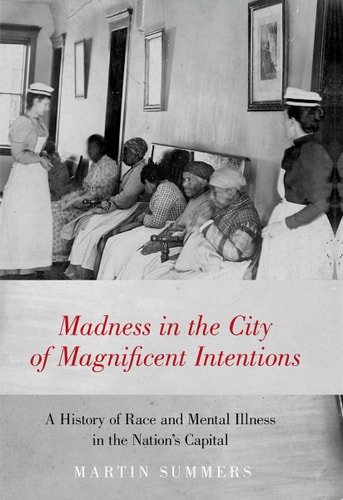
From The Mid-nineteenth To The Late Twentieth Centuries, Saint Elizabeths Hospital Was One Of The United States' Most Important Institutions For The Care And Treatment Of The Mentally Ill. Founded In 1855 To Treat Insane Soldiers And Sailors As Well As Civilian Residents In The Nation's Capital, The Institution Became One Of The Country's Preeminent Research And Teaching Psychiatric Hospitals. From The Beginning Of Its Operation, Saint Elizabeths Admitted Black Patients, Making It One Of The Few American Asylums To Do So. This Book Is A History Of The Hospital And Its Relationship To Washington, Dc's African American Community. It Charts The History Of Saint Elizabeths From Its Founding To The Late-1980s, When The Hospital's Mission And Capabilities Changed As A Result Of Deinstitutionalization, And Its Transfer From The Federal Government To The District Of Columbia. Drawing On A Wide Variety Of Sources, Including Patient Case Files, The Book Demonstrates How Race Was Central To Virtually Every Aspect Of The Hospital's Existence, From The Ways In Which Psychiatrists Understood Mental Illness And Employed Therapies To Treat It To The Ways That Black Patients Experienced Their Institutionalization. The Book Argues That Assumptions About The Existence Of Distinctive Black And White Psyches Shaped The Therapeutic And Diagnostic Regimes In The Hospital And Left A Legacy Of Poor Treatment Of African American Patients, Even After Psychiatrists Had Begun To Reject Racialist Conceptions Of The Psyche. Yet Black Patients And Their Communities Asserted Their Own Agency And Exhibited A Rights Consciousness In Large And Small Ways, From Agitating For More Equal Treatment To Attempting To Manage The Therapeutic Experience.
Menrva's Summary
THE THESIS
This book investigates how race functioned as a central, defining factor in the diagnostic and therapeutic practices at Saint Elizabeths Hospital from its inception in 1855 through the late 1980s. Martin Summers, a historian specializing in African American history and the history of medicine, utilizes extensive archival research—including patient case files and institutional records—to argue that racialized assumptions about the psyche dictated the quality of care provided to Black patients. He posits that these institutional biases persisted even as the medical field moved away from overt racialist theories, while simultaneously highlighting the agency exercised by Black patients and their families in navigating this system.
THE SCOPE MAP
What You Will Find
- A chronological history of Saint Elizabeths Hospital from 1855 to the late 1980s.
- An analysis of the intersection between psychiatric treatment and the African American community in Washington, D.C.
- Evidence derived from primary source patient case files and institutional administrative records.
Scope Limits
- The study focuses specifically on the relationship between Saint Elizabeths and the Black community, rather than providing a comprehensive history of all patient demographics.
- The narrative concludes in the late 1980s and does not cover the most recent developments in the hospital's modern operations.
THE AUTHORITY PERSPECTIVE
Scholars and historians recognize this work as a significant contribution to the history of American psychiatry and racial inequality. Readers frequently note the academic rigor and the depth of archival detail provided in the author's analysis of institutional racism.
Page Count:
400
Publication Date:
2019-01-01
Publisher:
Oxford University Press
ISBN-10:
0190852658
ISBN-13:
9780190852658
History
African American
MEDICAL History
Washington DC
Sociology
Psychiatry
Community Tags
Similar Books