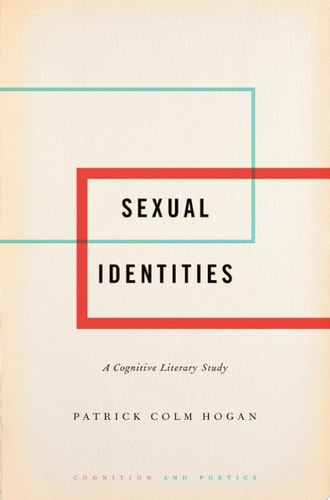
Sexual Identities: A Cognitive Literary Study
0
0
As an Amazon Associate and affiliate partner, Menrva Books earns from qualifying purchases. Learn more
Author Description
Cognitive cultural theorists have rarely taken up sex, sexuality, or gender identity. When they have done so, they have often stressed the evolutionary sources of gender differences. In Sexual Identities, Patrick Colm Hogan extends his pioneering work on identity to examine the complexities of sex, the diversity of sexuality, and the limited scope of gender. Drawing from a diverse body of literary works, Hogan illustrates a rarely drawn distinction between practical identity (the patterns in what one does, thinks, and feels) and categorical identity (how one labels oneself or is categorized by society). Building on this distinction, he offers a nuanced reformulation of the idea of social construction, distinguishing ideology, situational determination, shallow socialization, and deep socialization. He argues for a meticulous skepticism about gender differences and a view of sexuality as evolved but also contingent and highly variable. The variability of sexuality and the near absence of gender fixity--and the imperfect alignment of practical and categorical identities in both cases--give rise to the social practices that Judith Butler refers to as "regulatory regimes." Hogan goes on to explore the cognitive and affective operation of such regimes. Ultimately, Sexual Identities turns to sex and the question of how to understand transgendering in a way that respects the dignity of transgender people, without reverting to gender essentialism.
Menrva's Summary
THE THESIS
This book investigates the intersection of cognitive science and cultural theory to determine how sex, sexuality, and gender identity are constructed and experienced. Patrick Colm Hogan, a scholar in cognitive cultural studies, utilizes a framework that distinguishes between practical identity—the internal patterns of thought and action—and categorical identity—the external labels applied by society. He argues that while sexuality has evolutionary roots, it remains highly variable and contingent, necessitating a skeptical approach toward rigid gender essentialism.
THE SCOPE MAP
What You Will Find
- A cognitive analysis of the distinction between practical and categorical identity.
- A theoretical framework for understanding social construction through ideology, situational determination, and socialization.
- An exploration of the cognitive and affective mechanisms behind regulatory regimes.
- A discussion on transgender identity that avoids essentialist frameworks.
Scope Limits
- The text does not provide a comprehensive history of queer theory or sociological gender studies.
- The analysis focuses primarily on cognitive and literary perspectives rather than clinical or medical data.
THE AUTHORITY PERSPECTIVE
Experts recognize this work as a significant contribution to the field of cognitive poetics, noting its rigorous attempt to bridge the gap between biological evolution and social constructionism. Readers frequently highlight the academic density of the prose, which requires a foundational understanding of cognitive cultural theory to fully grasp the author's arguments.
Page Count:
297
Publication Date:
2017-01-01
Publisher:
Oxford University Press
ISBN-10:
0190857811
ISBN-13:
9780190857813
Cultural Theory
Literary Criticism
Gender Studies
English & College Success
Linguistics
English
Queer Theory
Cultural Anthropology
Community Tags
Similar Books