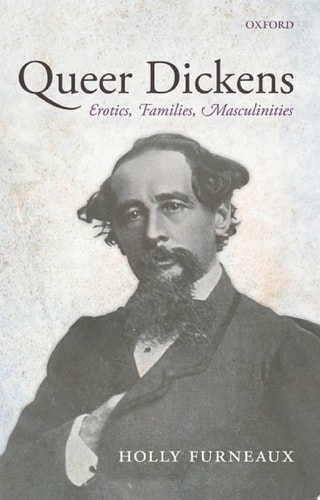
Queer Dickens: Erotics, Families, Masculinities
0
0
As an Amazon Associate and affiliate partner, Menrva Books earns from qualifying purchases. Learn more
Author Description
This book offers a radically new reading of Dickens and his major works. It demonstrates that, rather than representing a largely conventional, conservative view of sexuality and gender, he presents a distinctly queer corpus, everywhere fascinated by the diversity of gender roles, the expandability of notions of the family, and the complex multiplicity of sexual desire. The book examines the long overlooked figures of bachelor fathers, maritally resistant men, and male nurses. It explores Dickens's attention to a longing, not to reproduce, but to nurture, his interest in healing touch, and his articulation, over the course of his career, of homoerotic desire. Holly Furneaux places Dickens's writing in a broad literary and social context, alongside authors including Bulwer-Lytton, Tennyson, Braddon, Collins, and Whitman, to make a case for Dickens's central position in queer literary history. Examining novels, poetry, life-writing, journalism, and legal and political debates, Queer Dickens argues that this eminent Victorian can direct us to the ways in which his culture could, and did, comfortably accommodate homoeroticism and families of choice. Further, it contends that Dickens's portrayals of nurturing masculinity and his concern with touch and affect between men challenge what we have been used to thinking about Victorian ideals of maleness. Queer Dickens intervenes in current debates about the Victorians (neither so punitive nor so prudish as we once imagined) and about the methodologies of the histories of the family and of sexuality. It makes the case for a more optimistic, nurturing, and life-affirming trajectory in queer theory.
Menrva's Summary
THE THESIS
This book investigates whether Charles Dickens’s literary corpus reflects a conventional Victorian morality or a more complex, queer engagement with gender, sexuality, and family structures. Holly Furneaux, a scholar of Victorian literature, utilizes a wide array of primary sources—including novels, journalism, and legal debates—to argue that Dickens consistently challenged contemporary norms regarding masculinity and domesticity. By analyzing the recurring presence of non-traditional male figures and nurturing relationships, the author posits that Dickens’s work provides a more nuanced, optimistic perspective on Victorian social and sexual history than previously acknowledged.
THE SCOPE MAP
What You Will Find
- Analysis of bachelor fathers, male nurses, and maritally resistant characters in Dickens’s fiction.
- Comparative literary study involving authors such as Bulwer-Lytton, Tennyson, and Walt Whitman.
- Examination of Victorian legal and political debates concerning family and sexuality.
Scope Limits
- The study does not provide a comprehensive biography of Dickens, focusing instead on thematic analysis of his published works and social context.
- It does not attempt to definitively categorize Dickens’s personal sexual identity, focusing instead on the queer potential within his texts.
THE AUTHORITY PERSPECTIVE
Scholars and critics frequently identify this work as a significant intervention in Victorian studies, noting its ability to reframe established understandings of Dickensian masculinity. Readers often highlight the academic rigor of the prose and the author's success in connecting literary analysis with broader historical debates about sexuality.
Page Count:
293
Publication Date:
2009-01-01
Publisher:
OUP Oxford
ISBN-10:
0191609927
ISBN-13:
9780191609923
Cultural History
English
English & College Success
Queer Theory
Gender Studies
Literary Criticism