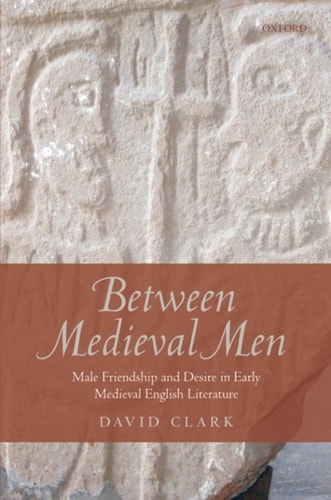
Between Medieval Men: Male Friendship and Desire in Early Medieval English Literature
0
0
As an Amazon Associate and affiliate partner, Menrva Books earns from qualifying purchases. Learn more
Author Description
Between Medieval Men argues for the importance of synoptically examining the whole range of same-sex relations in the Anglo-Saxon period, revisiting well-known texts and issues (as well as material often considered marginal) from a radically different perspective. The introductory chapters first lay out the premises underlying the book and its critical context, then emphasise the need to avoid modern cultural assumptions about both male-female and male-male relationships, and underline the paramount place of homosocial bonds in Old English literature. Part II then investigates the construction of and attitudes to same-sex acts and identities in ethnographic, penitential, and theological texts, ranging widely throughout the Old English corpus and drawing on Classical, Medieval Latin, and Old Norse material. Part III expands the focus to homosocial bonds in Old English literature in order to explore the range of associations for same-sex intimacy and their representation in literary texts such as Genesis A, Beowulf, The Battle of Maldon, The Dream of the Rood, The Phoenix, and Ælfric's Lives of Saints. During the course of the book's argument, David Clark uncovers several under-researched issues and suggests fruitful approaches for their investigation. He concludes that, in omitting to ask certain questions of Anglo-Saxon material, in being too willing to accept the status quo indicated by the extant corpus, in uncritically importing invisible (because normative) heterosexist assumptions in our reading, we risk misrepresenting the diversity and complexity that a more nuanced approach to issues of gender and sexuality suggests may be more genuinely characteristic of the period.
Menrva's Summary
THE THESIS
This book investigates the nature of same-sex relations and homosocial bonds within Anglo-Saxon literature and culture, questioning how modern heteronormative assumptions have obscured historical realities. David S. Clark, a scholar of early medieval studies, utilizes a broad corpus of ethnographic, penitential, and theological texts to challenge established interpretations of gender and sexuality in the period. He argues that by failing to interrogate the status quo of the extant corpus, scholars risk misrepresenting the complexity of intimacy and social identity in early medieval England.
THE SCOPE MAP
What You Will Find
- Analysis of homosocial bonds in texts including Beowulf, The Battle of Maldon, and The Dream of the Rood.
- Examination of penitential and theological attitudes toward same-sex acts.
- Integration of Classical, Medieval Latin, and Old Norse comparative material.
Scope Limits
- The study focuses primarily on the Anglo-Saxon period and does not extend into later medieval developments.
- It does not provide an exhaustive catalog of all same-sex references but rather a thematic framework for interpretation.
THE AUTHORITY PERSPECTIVE
Scholars recognize this work as a significant intervention in the study of early medieval gender and sexuality. Readers frequently note the academic density of the prose and the author's rigorous application of critical theory to historical texts.
Page Count:
240
Publication Date:
2009-01-01
Publisher:
Oxford University Press
ISBN-10:
0191567884
ISBN-13:
9780191567889
History
Literary Criticism
Anglo-Saxon
English
English & College Success
Queer Theory
Gender Studies
In literature
Community Tags
Similar Books