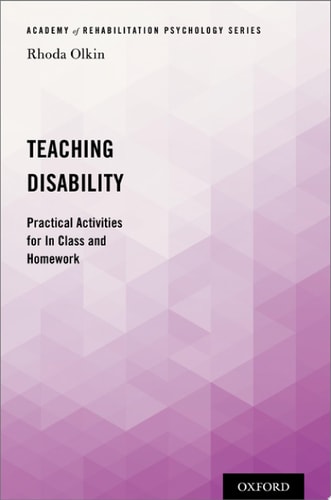
Teaching Disability: Practical Activities for In Class and Homework
0
0
As an Amazon Associate and affiliate partner, Menrva Books earns from qualifying purchases. Learn more
Author Description
This book takes a nonpathological approach to disability, viewing it as part of diversity rather than as deficit. The opening chapters introduce basic knowledge of teaching in disability communities, covering attitudes and behaviors that may be difficult for instructors to relate to. Next, the book delves into the three activities sections that increase in difficulty over the course of the book. The activities highlight barriers and psychosocial impediments that hamper progress in disability communities. Designed by an expert educator and clinician who is also an insider in the disability community, each of the 34 activities translate well in classroom environments or as homework, and each can be done individually or in group settings. All activities include a list of required materials, time expectation, goal setting criteria, possible outcomes, and talking and debriefing points for reflection, thereby facilitating effective planning and execution. The activities also recommend possible modifications to adjust the difficulty of the activities. This flexibility makes this a valuable resource for a wider audience of expertise and settings, ranging from introductory to sophisticated readers and users, students and non-students, in classrooms, in workshops, or in other surroundings.Lastly, the book concludes with a chapter on accessing outcomes, with six measures for evaluating knowledge and skill. Teaching Disability is a well-rounded, highly applicable tool for instructors and students in the disability community.
Menrva's Summary
THE THESIS
This book investigates how to effectively teach disability studies by adopting a nonpathological framework that views disability as a form of human diversity rather than a deficit. Author Rhoda Olkin, an expert educator and clinician with personal experience in the disability community, provides a structured pedagogical approach. She argues that by shifting the focus from medical models to psychosocial barriers, instructors can foster more inclusive and accurate understandings of disability experiences.
THE SCOPE MAP
What You Will Find
- 34 distinct activities designed for classroom or homework application
- Standardized planning templates including time requirements, goals, and materials
- Debriefing and reflection protocols for student assessment
- Six specific measures for evaluating learning outcomes
Scope Limits
- The text focuses primarily on pedagogical application rather than theoretical history
- It does not provide an exhaustive medical or clinical encyclopedia of specific disabilities
THE AUTHORITY PERSPECTIVE
Educators and clinicians frequently cite this work as a highly practical resource for translating complex disability theory into actionable classroom exercises. Experts highlight the book's utility in bridging the gap between academic study and real-world psychosocial awareness.
Page Count:
217
Publication Date:
2021-01-01
Publisher:
Oxford University Press
ISBN-10:
019085068X
ISBN-13:
9780190850685
Psychology
Allied Health
People with Disabilities
Teaching Methods
Medical
Social Science
Education
Community Tags
Other Editions(2)
Similar Books