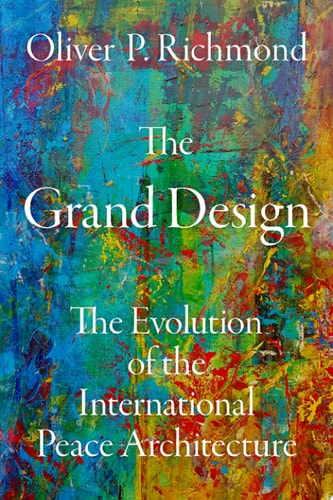
The Grand Design: The Evolution of the International Peace Architecture
0
0
As an Amazon Associate and affiliate partner, Menrva Books earns from qualifying purchases. Learn more
Author Description
The guiding principle of peacemaking and peacebuilding over the past quarter century has been "liberal peace": the promotion of democracy, capitalism, law, and respect for human rights. These components represent a historic effort to prevent a reoccurrence of the nationalism, fascism, and economic collapse that led to the World Wars as well as many later conflicts. Ultimately, this strategy has been somewhat successful in reducing war between countries, but it has failed to produce legitimate and sustainable forms of peace at the domestic level. The goals of peacebuilding have changed over time and place, but they have always been built around compromise via processes of intervention aimed at supporting "progress" in conflict-affected countries. They have simultaneously promoted changes in the regional and global order. As Oliver P. Richmond argues in this book, the concept of peace has evolved continuously through several eras: from the imperial era, through the states-system, liberal, and current neoliberal eras of states and markets. It holds the prospect of developing further through the emerging "digital" era of transnational networks, new technologies, and heightened mobility. Yet, as recent studies have shown, only a minority of modern peace agreements survive for more than a few years and many peace agreements and peacebuilding missions have become intractable, blocked, or frozen. This casts a shadow on the legitimacy, stability, and effectiveness of the overall international peace architecture, reflecting significant problems in the evolution of an often violently contested international and domestic order. This book examines the development of the international peace architecture, a "grand design" comprising various subsequent attempts to develop a peaceful international order. Richmond examines six main theoretical-historical stages in this process often addressed through peacekeeping and international mediation, including the balance of power mechanism o
Menrva's Summary
THE THESIS
This book investigates the historical evolution and current legitimacy crisis of the international peace architecture, questioning why liberal peacebuilding strategies have succeeded in reducing interstate conflict while failing to establish sustainable domestic peace. Oliver P. Richmond, a professor of International Relations, utilizes a historical-theoretical framework to analyze how peacemaking concepts have shifted from imperial and state-centric models to contemporary neoliberal and digital-era paradigms. He argues that the persistent failure of peace agreements stems from a flawed 'grand design' that prioritizes top-down intervention over local legitimacy.
THE SCOPE MAP
What You Will Find
- A chronological analysis of six theoretical-historical stages of international peace architecture.
- An examination of the transition from imperial and state-system models to neoliberal and digital-era networks.
- Critical assessment of peacekeeping, international mediation, and the balance of power mechanism.
Scope Limits
- The text focuses primarily on the structural and theoretical evolution of international systems rather than detailed ethnographic case studies of specific local peacebuilding projects.
THE AUTHORITY PERSPECTIVE
Scholars in the field of international relations recognize this work as a significant contribution to the critique of liberal peacebuilding paradigms. Readers frequently note the academic density of the prose, which serves as a rigorous examination for students and practitioners of global governance.
Page Count:
319
Publication Date:
2022-01-01
Publisher:
Oxford University Press
ISBN-10:
0190850469
ISBN-13:
9780190850463
History
International relations
Peace Building
Trades & Technology
Technology & Engineering
Peace studies
Community Tags
Similar Books