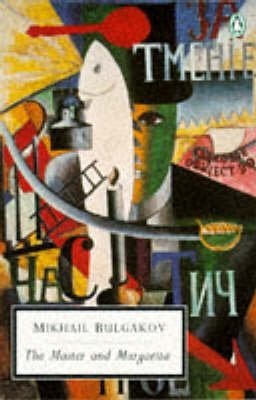
The Master and Margarita
0
0
As an Amazon Associate and affiliate partner, Menrva Books earns from qualifying purchases. Learn more
Author Description
The Master and Margarita (Russian: Мастер и Маргарита) is a novel by Mikhail Bulgakov, written in the Soviet Union between 1928 and 1940. The story concerns a visit by the devil and his entourage to the officially atheist Soviet Union. The devil, manifested as one Professor Woland, challenges the Soviet citizens' beliefs towards religion and condemns their behavior throughout the book. The Master and Margarita combines supernatural elements with satirical dark comedy and Christian philosophy, defying categorization within a single genre. Many critics consider it to be one of the best novels of the 20th century, as well as the foremost of Soviet satires. A censored version, with several chapters cut by editors, was published posthumously in Moscow magazine in 1966–1967 by his widow Elena Bulgakova. The manuscript was not published as a book until 1967, in Paris. A samizdat version circulated that included parts cut out by official censors, and these were incorporated in a 1969 version published in Frankfurt. The novel has since been published in several languages and editions.
Menrva's Summary
THE PULSE
The arrival of a mysterious professor in 1930s Moscow triggers a series of supernatural events that expose the moral rot and hypocrisy of the Soviet literary elite. The protagonist, a writer known as the Master, struggles against the stifling censorship and institutionalized atheism of his era, while his devoted lover, Margarita, makes a desperate pact with the devil to rescue him. These characters navigate a world where the boundaries between reality and the demonic dissolve, forcing them to confront their own integrity in a society that demands conformity. The narrative framework employs a complex, multi-layered structure that weaves together the contemporary Moscow chaos, a retelling of the trial of Yeshua Ha-Nozri, and the surreal antics of Woland’s demonic retinue.
INSIDE THE PAGES
- Dual-narrative structure alternating between 1930s Moscow and first-century Jerusalem
- Satirical depiction of the Soviet literary bureaucracy and the Moscow elite
- Incorporation of Christian philosophy and Gnostic themes
- Use of magical realism to disrupt the mundane reality of the Soviet state
- Episodic, chaotic pacing driven by the unpredictable actions of Woland and his entourage
- Meta-fictional elements regarding the act of writing and the fate of manuscripts
- Vivid, grotesque characterizations of the demonic figures
- Exploration of the conflict between individual artistic freedom and state-imposed ideology
THE COLLECTIVE ECHO
This novel is widely regarded as a pinnacle of 20th-century literature, celebrated for its intricate layering of political satire and metaphysical inquiry. Readers and critics frequently highlight the work's ability to maintain a sharp, biting wit while simultaneously addressing profound questions of faith and morality. The text is often analyzed for its historical context, specifically how it reflects the personal struggles of an author living under the intense pressure of Soviet censorship. Its enduring popularity stems from the seamless integration of the supernatural with the mundane, creating a narrative that remains both challenging and accessible to modern audiences.
Page Count:
416
Publication Date:
1969-01-01
Publisher:
Fontana
ISBN-10:
0006118739
ISBN-13:
9780006118732
Fantasy
Satire
Philosophical
Classics
Historical
classic
Literature & Fiction