Author Description
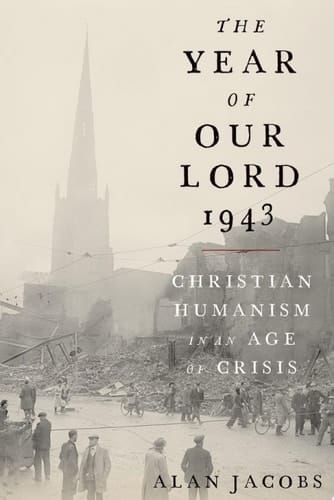
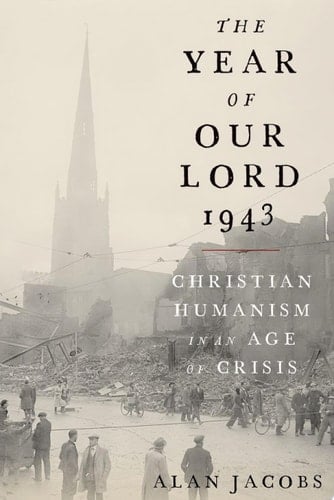
By early 1943, it had become increasingly clear that the Allies would win the Second World War. Around the same time, it also became increasingly clear to many Christian intellectuals on both sides of the Atlantic that the soon-to-be-victorious nations were not culturally or morally prepared for their success. A war won by technological superiority merely laid the groundwork for a post-war society governed by technocrats. These Christian intellectuals-Jacques Maritain, T. S. Eliot, C. S. Lewis, W. H. Auden, and Simone Weil, among others-sought both to articulate a sober and reflective critique of their own culture and to outline a plan for the moral and spiritual regeneration of their countries in the post-war world. In this book, Alan Jacobs explores the poems, novels, essays, reviews, and lectures of these five central figures, in which they presented, with great imaginative energy and force, pictures of the very different paths now set before the Western democracies. Working mostly separately and in ignorance of one another's ideas, the five developed a strikingly consistent argument that the only means by which democratic societies could be prepared for their world-wide economic and political dominance was through a renewal of education that was grounded in a Christian understanding of the power and limitations of human beings. The Year of Our Lord 1943 is the first book to weave together the ideas of these five intellectuals and shows why, in a time of unprecedented total war, they all thought it vital to restore Christianity to a leading role in the renewal of the Western democracies.
Menrva's Summary
THE THESIS
How did a group of mid-twentieth-century Christian intellectuals propose to address the moral and cultural vacuum facing Western democracies in the wake of the Second World War? Alan Jacobs, a professor of humanities, examines the collective output of five prominent thinkers—Jacques Maritain, T. S. Eliot, C. S. Lewis, W. H. Auden, and Simone Weil—during the pivotal year of 1943. By analyzing their diverse body of work, Jacobs argues that these figures independently converged on the necessity of a renewed, Christian-grounded educational framework to prevent a post-war society dominated by technocratic materialism.
THE SCOPE MAP
What You Will Find
- An analysis of the intellectual climate of 1943 regarding the impending Allied victory.
- A comparative study of the works of Maritain, Eliot, Lewis, Auden, and Weil.
- A synthesis of arguments regarding the role of Christian humanism in democratic governance.
Scope Limits
- The book does not provide a comprehensive history of the entire war effort.
- It does not focus on the political or military strategies of the Allied leaders.
THE AUTHORITY PERSPECTIVE
Scholars and readers frequently note the clarity with which Jacobs synthesizes complex theological and philosophical arguments into a cohesive historical narrative. Experts highlight this work as a significant contribution to understanding the intersection of mid-century intellectual history and the development of modern Christian thought.
Page Count:
276
Publication Date:
2018-01-01
Publisher:
Oxford University Press
ISBN-10:
0190864672
ISBN-13:
9780190864675
History
Religion
Philosophy
Military History
Intellectual History
Twenty-first Century
World War
Christianity
Community Tags
Similar Books