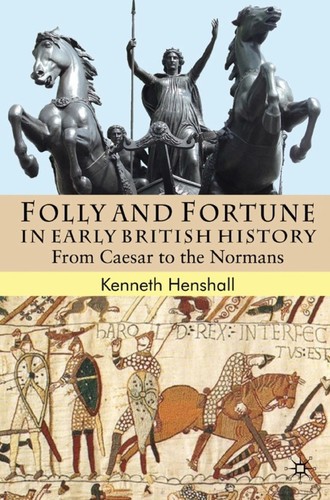
Folly and Fortune in Early British History
0
0
As an Amazon Associate and affiliate partner, Menrva Books earns from qualifying purchases. Learn more
Author Description
Many questions are examined in Folly and Fortune in Early British History, in which Kenneth Henshall attempts to restore human beings, with all their human failings and eccentricities, to a central role in history. In particular, he turns the spotlight on human folly and its decisive influence on some of the key events and epochal turning-points in British history between Caesar's invasion and the Norman Conquest. Many historians believe it impossible to evaluate folly in a bygone age, but Henshall disagrees, taking the reader through the most momentous events of the Roman, Saxon, and Viking eras, and examining the decisions of some of the leading actors involved. By casting a fresh eye over apparently familiar territory, he demonstrates the inaccuracy of many popular assumptions about the wisdom or foolishness of these prominent historical figures. Folly and Fortune in Early British History concludes each section with a series of provocative questions, encouraging the reader to place themselves at that point in time and consider the alternative options besides.--Jacket.
Menrva's Summary
THE THESIS
This book investigates the role of human folly and its impact on pivotal moments in early British history. Kenneth Henshall, drawing on his expertise, challenges the notion that folly is impossible to evaluate in past ages. He meticulously examines key events from Caesar's invasion to the Norman Conquest, focusing on the decisions of prominent historical figures during the Roman, Saxon, and Viking eras. By re-evaluating familiar historical narratives, Henshall aims to correct popular misconceptions about the wisdom and foolishness of these leaders, ultimately restoring human fallibility to a central place in historical analysis.
THE SCOPE MAP
- Analysis of human folly's influence on key events in British history (Caesar's invasion to Norman Conquest).
- Examination of decisions made by prominent figures during the Roman, Saxon, and Viking eras.
- Re-evaluation of popular assumptions regarding the wisdom and foolishness of historical leaders.
- Provocative questions at the end of each section to encourage reader engagement and consideration of alternative historical paths.
THE AUTHORITY PERSPECTIVE
The book is presented as a scholarly work that challenges conventional historical interpretations by focusing on the human element of folly. It aims to provide a fresh perspective on well-known periods and figures, encouraging readers to question established narratives. The structure, which includes concluding questions, suggests an interactive approach designed to stimulate critical thinking about historical decision-making.
Page Count:
334
Publication Date:
2008-01-01
ISBN-10:
0230555209
ISBN-13:
9780230555204
Politics
Non-Fiction
History
British History
Community Tags
Similar Books