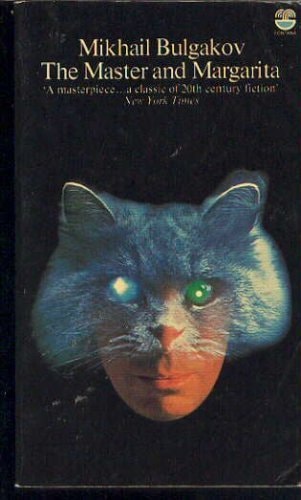
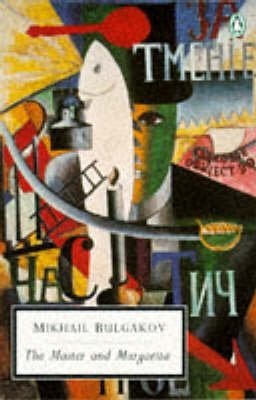
The Master and Margarita
0
0
As an Amazon Associate and affiliate partner, Menrva Books earns from qualifying purchases. Learn more
Author Description
The Master and Margarita (Russian: Мастер и Маргарита) is a novel by Mikhail Bulgakov, written in the Soviet Union between 1928 and 1940. The story concerns a visit by the devil and his entourage to the officially atheist Soviet Union. The devil, manifested as one Professor Woland, challenges the Soviet citizens' beliefs towards religion and condemns their behavior throughout the book. The Master and Margarita combines supernatural elements with satirical dark comedy and Christian philosophy, defying categorization within a single genre. Many critics consider it to be one of the best novels of the 20th century, as well as the foremost of Soviet satires. A censored version, with several chapters cut by editors, was published posthumously in Moscow magazine in 1966–1967 by his widow Elena Bulgakova. The manuscript was not published as a book until 1967, in Paris. A samizdat version circulated that included parts cut out by official censors, and these were incorporated in a 1969 version published in Frankfurt. The novel has since been published in several languages and editions.
Menrva's Summary
THE PULSE
The arrival of the devil in 1930s Moscow triggers a chaotic collision between supernatural forces and the rigid, atheistic bureaucracy of the Soviet state. The protagonist, a writer known as the Master, struggles to maintain his sanity and artistic integrity while his lover, Margarita, makes a desperate pact with dark powers to rescue him. Opposing them are the cynical literary elites and the oppressive state apparatus, which seek to suppress any truth that defies their secular dogma. The narrative employs a complex, non-linear structure that weaves together the contemporary Moscow events with a reimagined account of Pontius Pilate’s trial of Yeshua Ha-Nozri in ancient Jerusalem.
INSIDE THE PAGES
- Dual-narrative structure alternating between 1930s Moscow and first-century Judea
- Satirical portrayal of the Soviet literary establishment and bureaucratic corruption
- Incorporation of supernatural elements and demonic mischief within a realistic urban setting
- Philosophical exploration of cowardice, faith, and the nature of good and evil
- Use of metafiction, as the Master writes a novel that mirrors the events of the book
- Vivid, grotesque imagery depicting the devil's entourage and their antics
- Themes of artistic persecution and the endurance of love against state censorship
- Stylistic shifts between dark comedy, historical drama, and surrealist fantasy
THE COLLECTIVE ECHO
This novel is widely regarded as a pinnacle of 20th-century literature, celebrated for its intricate layering of political critique and metaphysical inquiry. The work is frequently analyzed for its bold defiance of Soviet-era censorship and its profound synthesis of Christian motifs with biting social commentary. Readers often highlight the balance between the comedic absurdity of Woland’s retinue and the somber, lyrical weight of the Jerusalem chapters. The text remains a subject of intense scholarly debate regarding its structural complexity and its enduring relevance to the relationship between the artist and the state. Its status as a cultural phenomenon is cemented by its long history of underground circulation and eventual emergence as a cornerstone of world literature.
Page Count:
415
Publication Date:
1979-01-01
Publisher:
Fontana
ISBN-10:
0006144292
ISBN-13:
9780006144298
Fantasy
Satire
Classics
classic
Philosophical
Literature & Fiction
Community Tags
Other Editions(8)





Similar Books
Reader Comments
Share Your Thoughts
No comments yet. Be the first to share your thoughts!