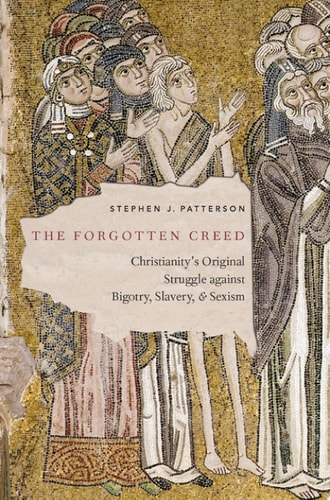
The Forgotten Creed
0
0
As an Amazon Associate and affiliate partner, Menrva Books earns from qualifying purchases. Learn more
Author Description
Long Before The Followers Of Jesus Declared Him To Be The Son Of God, Jesus Taught His Followers That They Too Were The Children Of God. This Ancient Creed, Now All But Forgotten, Is Recorded Still Within The Folds Of A Letter Of Paul The Apostle. Paul Did Not Create This Creed, Nor Did He Fully Embrace It, But He Quoted It And Thus Preserved It For A Time When It Might Become Important Once Again. This Ancient Creed Said Nothing About God Or Christ Or Salvation. Its Claims Were About The Whole Human Race: There Is No Race, There Is No Class, There Is No Gender. This Is The Story Of That First, Forgotten Creed, And The World Of Its Begetting, A World In Which Foreigners Were Feared, Slaves Were Human Chattel, And Men Questioned Whether Women Were Really Human After All. Into This World The Followers Of Jesus Proclaimed: You Are All Children Of God. There Is No Jew Or Greek, No Slave Or Free, No Male And Female, For You Are All One. Where Did This Remarkable Statement Of Human Solidarity Come From, And What, Finally, Happened To It? How Did Christianity Become A Gentile Religion That Despised Jews, Condoned Slavery As The Will Of God, And Championed Patriarchy? Christian Theologians Would One Day Argue About The Nature Of Christ, The Being Of God, And The Mechanics Of Salvation. But Before This, In The Days When Jesus Was Still Fresh In The Memory Of Those Who Knew Him, The Argument Was A Different One: How Can Human Beings Overcome The Ways By Which We Divide Ourselves One From Another? Is Solidarity Possible Beyond Race, Class, And Gender?
Menrva's Summary
THE THESIS
The book investigates the origins and subsequent disappearance of an early Christian creed that emphasized radical human equality, questioning how a movement rooted in universal solidarity evolved into a structure that reinforced social hierarchies.
Stephen J. Patterson, a scholar of early Christianity, utilizes historical analysis and textual criticism to examine the social context of the first century. He argues that the early followers of Jesus promoted a vision of human unity that transcended race, class, and gender, which stood in stark contrast to the prevailing cultural norms of the Roman Empire. By tracing the evolution of this creed, Patterson explores the shift from a message of egalitarianism to the institutionalized dogmas of later Christianity.
THE SCOPE MAP
What You Will Find
- Historical analysis of the social and political climate of the Roman Empire in the first century.
- Textual examination of the Pauline epistles, specifically Galatians 3:28.
- Investigation into the transition of Christianity from a small, inclusive movement to a formal religious institution.
Scope Limits
- The book does not provide a comprehensive history of the entire Christian church.
- It does not focus on the theological debates regarding the nature of Christ or the mechanics of salvation that emerged in later centuries.
THE AUTHORITY PERSPECTIVE
Scholars and readers often note the accessibility of Patterson's prose, which makes complex historical and theological concepts understandable for a general audience. Experts highlight this work as a significant contribution to the study of early Christian social ethics and the historical Jesus movement.
Page Count:
256
Publication Date:
2018-01-01
Publisher:
Oxford University Press
ISBN-10:
0190865830
ISBN-13:
9780190865832
History
Religion
Sociology
Christian History
Theology