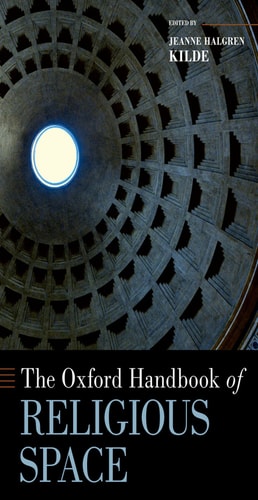
The Oxford Handbook of Religious Space
0
0
As an Amazon Associate and affiliate partner, Menrva Books earns from qualifying purchases. Learn more
Author Description
How do we understand religious spaces? What is their role or function within specific religious traditions or with respect to religious experience? This handbook brings together thirty-three essays addressing these questions using a range of methods and approaches to examine specific spaces or types of spaces around the world and across time. The authors here represent and draw upon many disciplines: religious studies and religion, anthropology, archaeology, architectural history and architecture, cultural and religious history, sociology, geography, gender and women's studies and others. Their essays are snapshots, each offering a specific way to think about the religious space(s) under consideration: Roman shrines, Jewish synagogues, Christian churches, Muslim and Catholic shrines, indigenous spaces in Central America and East Africa, cemeteries, memorials, and more.Some overarching principles emerge from these snapshots. The authors demonstrate that religious spaces are simultaneously individual and collective, personal and social; that they are influenced by culture, tradition, and immediate circumstances; and that they participate in various relationships of power. These essays demonstrate that religious spaces do not simply provide a convenient background for religious action but are also constituent of religious meaning and religious experience; they play an active role in creating, expressing, broadcasting, maintaining, and transforming religious meanings and religious experiences. By learning how religious spaces function, readers of this collection will gain a deeper understanding of religious life and religions themselves.
Menrva's Summary
THE THESIS
This handbook investigates how religious spaces function as active agents in the construction, expression, and transformation of religious meaning and experience. Editor Jeanne Halgren Kilde compiles thirty-three essays from a multidisciplinary group of scholars to examine the intersection of physical environment and spiritual practice. The text argues that religious spaces are not merely passive backdrops for ritual, but are instead constituent elements that shape the social and individual dimensions of faith across diverse historical and cultural contexts.
THE SCOPE MAP
What You Will Find
- Analysis of diverse sites including Roman shrines, synagogues, churches, mosques, and indigenous sacred spaces.
- Methodological approaches drawn from archaeology, geography, sociology, and architectural history.
- Examination of the power dynamics inherent in the creation and maintenance of religious environments.
Scope Limits
- The text does not provide an exhaustive catalog of every global religious site.
- It does not focus on theological doctrine independent of its spatial manifestation.
THE AUTHORITY PERSPECTIVE
Scholars and students frequently cite this collection as a foundational resource for understanding the spatial dimensions of religious practice. Experts highlight the academic density of the prose and the breadth of the interdisciplinary perspectives provided by the contributors.
Page Count:
611
Publication Date:
2022-01-01
Publisher:
Oxford University Press
ISBN-10:
0190875003
ISBN-13:
9780190875008
Architecture
Religion
Anthropology
Sociology
History of Architecture
Technology Design
Professional Career & Trade
Community Tags
Similar Books