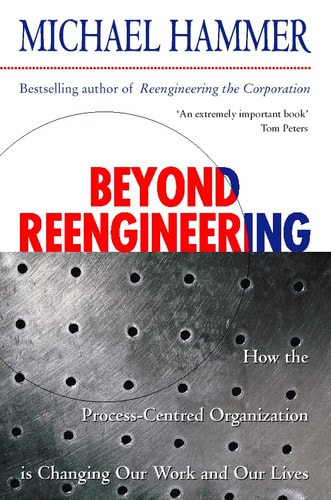
Beyond Reengineering
0
0
As an Amazon Associate and affiliate partner, Menrva Books earns from qualifying purchases. Learn more
Author Description
Reengineering has captured the imagination of managers and shareholders alike, sending corporations on journeys of radical business redesign that have already begun to transfigure global industry. Yet aside from earning them improvements in their business performance, the shift into more-process-centered organizations is causing fundamental changes in the corporate world, changes that business leaders are only now beginning to understand. What will the revolutions final legacy be? Beyond Reengineering addresses this question, exploring reengineering's effects on such areas as:Jobs: What does process-centering do to the nature of jobs? What does a process-centered workplace feel like?Managers: What is the new role of the manager in a process-centered company?Education: What skills are vital in the process-centered working world, and how can young or inexperienced workers prepare?Society: What are the implications of process-centering for employment and the economy as a whole?Investment: What are the characteristics of a successful 21st-century corporation?An informed look at one of the most profound changes to ever sweep the corporate world, Beyond Reengineering is the business manual for the 21st century.
Menrva's Summary
THE THESIS
What are the long-term structural and societal implications of the shift toward process-centered organizations in the global corporate landscape? Michael Hammer, a pioneer of the reengineering movement, examines the transition from traditional hierarchical structures to process-based models. He utilizes his extensive consulting experience and observations of corporate evolution to argue that reengineering is not merely a performance improvement tool but a fundamental redesign of the modern working world. The text provides a framework for understanding how these changes impact individual roles, management responsibilities, and broader economic stability.
THE SCOPE MAP
What You Will Find
- Analysis of the changing nature of jobs and workplace environments within process-centered organizations.
- Redefinition of the role of management in a decentralized, process-oriented hierarchy.
- Evaluation of the skills required for the 21st-century workforce and educational implications.
- Assessment of the macro-economic and societal consequences of widespread corporate reengineering.
THE AUTHORITY PERSPECTIVE
The text offers a high-level analysis of organizational theory that reflects the management trends of the late 1990s. It serves as a foundational document for those studying the evolution of corporate structure and the transition toward process-centric business models.
Page Count:
356
Publication Date:
1998-03-02
Publisher:
HarperCollins Business
ISBN-10:
000638711X
ISBN-13:
9780006387114
Business
Economics
Strategy & Competition
Microeconomics
Corporate Strategy
Organizational change
Economics
Macroeconomics
Management
Community Tags
Other Editions(3)
Similar Books