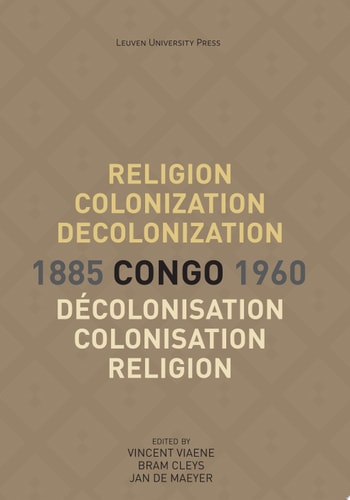
Religion, Colonization and Decolonization in Congo, 1885-1960
0
0
As an Amazon Associate and affiliate partner, Menrva Books earns from qualifying purchases. Learn more
Author Description
Religion in today’s Democratic Republic of Congo has many faces: from the overflowing seminaries and Marian shrines of the Catholic Church to the Islamic brotherhoods, from the healers of Kimban-guism to the televangelism of the booming Pentecostalist churches in the great cities, from the Orthodox communities of Kasai to the ‘invisible’ Mai Mai warriors in the brousse of Kivu. During the colonial period religion was no less central to people’s lives than it is today. More surprisingly, behind the seemingly smooth facade of missions linked closely to imperial power, faith and worship were already marked by diversity and dynamism, tying the Congo into broader African and global movements. The contributions in this book provide insight into the multifaceted history of the interaction between religion and colonization. The authors outline the institutional political framework, and focus on the challenge that old and new forms of slavery entailed for the missions. The atrocities committed at the time of the Congo Free State became an existential question for young Christian communities. In the Belgian Congo after 1908, more structural forms of colonial violence remained a key issue marking religious experiences. And yet, religion also acted as a bridge. The authors emphasize the role intermediaries such as catechists or medical assistants played in the African “appropriation” of Christianity. They examine the complex interaction with indigenous religious beliefs and practices, and zoom in on the part religions played in the independence movement, as well as on their reaction to independence itself. Coming at a moment when Belgium confronts its colonial past, this volume provides a timely reassessment of religion as a key factor.
Menrva's Summary
THE THESIS
This book investigates the complex and dynamic interplay between religion and colonization in the Congo between 1885 and 1960. The authors explore the multifaceted religious landscape of the Democratic Republic of Congo, examining how faith, in its diverse forms, was central to people's lives during the colonial era. They detail the institutional political framework and the challenges posed by slavery to missions, as well as the existential questions raised by the atrocities of the Congo Free State. The book further analyzes the structural colonial violence in the Belgian Congo and highlights the crucial role of intermediaries in the African appropriation of Christianity, alongside interactions with indigenous beliefs and the role of religion in the independence movement.
THE SCOPE MAP
- The institutional political framework of religion during the colonial period.
- The challenges posed by old and new forms of slavery to missions.
- The impact of atrocities committed during the Congo Free State era on Christian communities.
- The role of structural colonial violence in shaping religious experiences in the Belgian Congo.
- The significance of intermediaries such as catechists and medical assistants in the African appropriation of Christianity.
- The complex interaction between Christianity and indigenous religious beliefs and practices.
- The part religions played in the independence movement and their reactions to independence.
THE AUTHORITY PERSPECTIVE
This volume offers a timely reassessment of religion as a key factor in the history of the Congo, particularly relevant as Belgium confronts its colonial past. The book's contributions provide insight into the multifaceted history of the interaction between religion and colonization, moving beyond a simplistic view of missions closely tied to imperial power. It highlights the diversity and dynamism within religious life, demonstrating how faith connected the Congo to broader African and global movements. The analysis focuses on the specific historical context, examining both the oppressive aspects of colonial rule and the agency of local populations in shaping their religious experiences.
Page Count:
336
Publication Date:
2020-10-30
Publisher:
Leuven University Press
ISBN-10:
9462701423
ISBN-13:
9789462701427
History
Religion
Non-Fiction
Colonialism
Africa
Community Tags
Similar Books