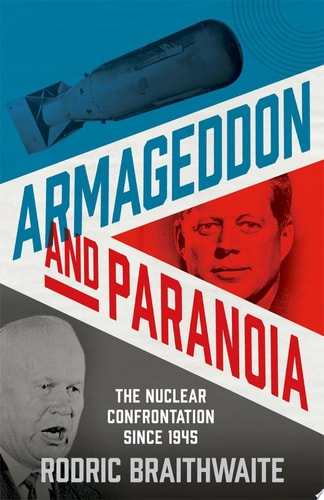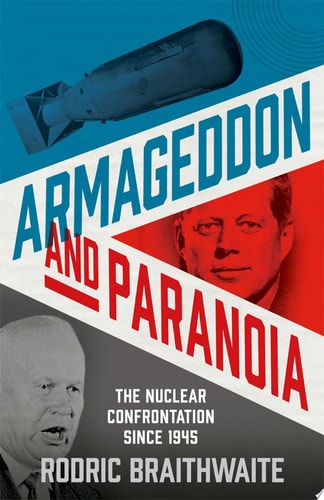
Armageddon and Paranoia
0
0
As an Amazon Associate and affiliate partner, Menrva Books earns from qualifying purchases. Learn more
Author Description
Former British Ambassador to the Soviet Union and author of the definitive account of the Soviet invasion and occupation of Afghanistan, Sir Rodric Braithwaite offers here a tour d'horizon of nuclear policy from the end of World War II and start of the Cold War to the present day. Armageddon and Paranoia unfolds the full history of nuclear weapons that began with the arms race between the United States and the Soviet Union and now extends worldwide. For decades, an apocalypse seemed imminent, staved off only by the certainty that if one side launched these missiles the other would launch an equally catastrophic counterstrike. This method of avoiding all-out nuclear warfare was called deterrence, a policy of Mutually Assured Destruction (MAD). Still, though neither side actively wanted to plunge the world into nuclear wasteland, the possibility of war by misjudgment or mistake meant fears could never be entirely assuaged. Both an exploration of deterrence and the long history of superpower nuclear policy, Armageddon and Paranoia comes at a time when tensions surrounding nuclear armament have begun mounting once more. No book until this one has offered so comprehensive a history of the topic that has guided--at times dominated--the world in which we live.
Menrva's Summary
THE THESIS
How did the doctrine of nuclear deterrence shape global security policy from the onset of the Cold War to the contemporary era? Sir Rodric Braithwaite, a former British Ambassador to the Soviet Union, utilizes his extensive diplomatic experience and historical research to analyze the evolution of nuclear strategy. He examines the transition from the initial arms race between the United States and the Soviet Union to the current, more complex global landscape of nuclear proliferation. The work argues that while Mutually Assured Destruction prevented direct superpower conflict, the persistent risk of miscalculation remains a central challenge to international stability.
THE SCOPE MAP
What You Will Find
- Historical analysis of nuclear policy from the end of World War II to the present.
- Examination of the doctrine of Mutually Assured Destruction and its impact on diplomatic relations.
- Case studies of superpower tensions and the mechanics of nuclear deterrence.
Scope Limits
- The text focuses primarily on the geopolitical and strategic history of nuclear weapons rather than the technical engineering of the devices themselves.
THE AUTHORITY PERSPECTIVE
Experts recognize this work as a comprehensive and authoritative account of nuclear history written from a unique diplomatic vantage point. Readers frequently note the clarity of the prose, which makes complex strategic concepts accessible to both students of history and general readers interested in international affairs.
Page Count:
432
Publication Date:
2018-01-01
Publisher:
Oxford University Press
ISBN-10:
0190870303
ISBN-13:
9780190870300
History
Cold War
International relations
Nuclear weapons
Military History
Community Tags
Similar Books