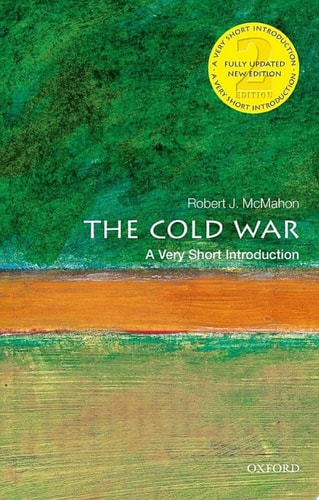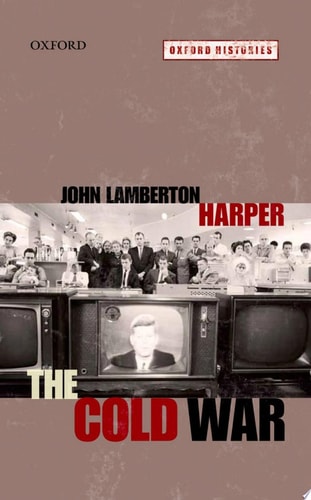
The Cold War
0
0
As an Amazon Associate and affiliate partner, Menrva Books earns from qualifying purchases. Learn more
Author Description
The East-west Struggle For Supremacy From 1945 To 1989 Shaped The Lives Of Hundreds Of Millions And Brought The World To The Brink Of Disaster On Several Occasions. More Than Two Decades On, The Debate Over Its Causes And Dynamics Is Far From Over. Drawing On The Latest Archival Evidence And Scholarly Research, Prize-winning Historian John Lamberton Harper Provides A Concise, Briskly-written Assessment Of The Cold War. Why Did It Start, And Eventually Envelope Nearly Every Corner Of The Planet? Why Did It Stay Cold, At Least In Its Original, European Theatre? Why Did It End, And Who Should Take The Credit? Harper Illuminates The Deep-seated Behavioural Patterns Within Both The Soviet Union And The United States: The Search For Security Through Expansion And Military Might, The Belief In A Messianic Mission To Uplift Humanity, But Also A Readiness To Live And Let Live Based On Membership In A Common State System And A Shared Interest In Survival. He Stresses Ways In Which Internal Competitions For Political Power Tilted Both The U.s. And Soviet Systems Towards Bellicosity And Obsessive Preparation For A Hot War That No One Seriously Intended To Begin. It Is A Story Of Delusions Of Omnipotence And Rash Behavior, Punctuated By Moments Of Redeeming Statesmanship And Self-restraint. Harper Concludes That, Rather Than Triumphalism, A Clear Look Back At The Cold War's Close Calls With Catastrophe And Enormous Cost In Lives And Treasure Ought To Evoke A Sense Of Regret And Humility, As Well As Relief.
Menrva's Summary
THE THESIS
This work investigates the origins, dynamics, and eventual conclusion of the Cold War, questioning why the conflict persisted for decades and how it shaped global geopolitical structures. John Lamberton Harper, a historian, utilizes recent archival evidence and scholarly research to analyze the behavioral patterns of the United States and the Soviet Union. He argues that internal political pressures in both nations drove a cycle of expansionism and military buildup, despite a mutual interest in avoiding direct nuclear confrontation. The text frames the era as a series of miscalculations and delusions of power, balanced by moments of restraint.
THE SCOPE MAP
What You Will Find
- Analysis of the geopolitical struggle between the U.S. and the Soviet Union from 1945 to 1989.
- Examination of the internal political dynamics that influenced foreign policy in both superpowers.
- Discussion of the role of messianic ideologies in shaping national security strategies.
Scope Limits
- The text focuses primarily on the U.S.-Soviet dynamic rather than an exhaustive history of every regional proxy conflict.
- It does not provide a minute-by-minute tactical account of military engagements.
THE AUTHORITY PERSPECTIVE
Experts and readers frequently cite this work as a balanced, accessible synthesis of complex historical events. It is often recommended for those seeking a concise overview that avoids the pitfalls of triumphalist historical narratives.
Page Count:
0
Publication Date:
2011-01-01
Publisher:
Oxford University Press
ISBN-10:
0191029386
ISBN-13:
9780191029387
History
Military History
International relations
Cold War
20th Century
Community Tags
Other Editions(3)
Similar Books