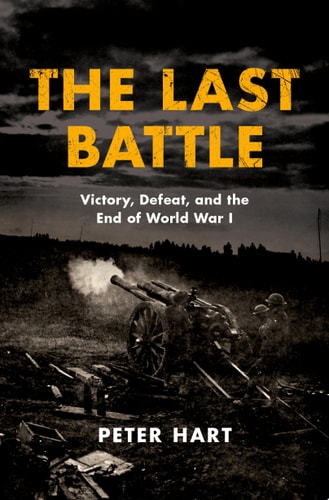
The Last Battle
0
0
As an Amazon Associate and affiliate partner, Menrva Books earns from qualifying purchases. Learn more
Author Description
Author Of The Great War, As Well As Celebrated Accounts Of The Battles Of The Somme, Passchendaele, Jutland, And Gallipoli, Historian Peter Hart Now Turns To World War One's Final Months. Much Has Been Made Of-and Written About-august 1914. There Has Been Comparatively Little Focus On August 1918 And The Lead-up To November. Because Of The Fixation On The Great War's Opening Moves, And The Great Battles That Followed Over The Course Of The Next Four Years, The Endgame Seems To Come As A Stunning Anticlimax. At The Eleventh Hour Of The Eleventh Day Of The Eleventh Month Of 1918 The Guns Simply Fell Silent. The Last Battle Definitively Corrects This Misperception. As Hart Shows, A Number Of Factors Precipitated The Armistice. After Four Years Of Bloodshed, Germany Was Nearly Bankrupt And There Was A Growing Rift Between The Military High Command And Political Leadership. But It Also Remained A Determined Combatant, And France And Great Britain Had Equally Been Stretched To Their Limits; Russia Had Abandoned The Conflict In The Late Winter Of 1918. However Complex The Causes Of Germany's Ultimate Defeat, Allied Success On The Western Front, As Hart Reveals, Tipped The Scales-the Triumphs At The Fifth Battle Of Ypres, The Sambre, The Selle, And The Meuse-argonne, Where American Forces Made Arguably Their Greatest Contribution. The Offensives Cracked The Hindenburg Line And Wore Down The German Resistance, Precipitating Collapse. Final Victory Came At Great Human Cost And Involved The Combined Efforts Of Millions Of Men. Using The Testimony Of A Range Of Participants, From The Doughboys, Tommies, German Infantrymen, And French Poilus Who Did The Fighting, To Those In Command During Those Last Days And Weeks, Hart Brings Intimacy And Sweep To The Events That Led To November 11, 1918.
Menrva's Summary
THE THESIS
This work investigates the often-overlooked final months of World War I to determine the specific military and political factors that forced the German collapse in 1918. Peter Hart, a prominent military historian and author of numerous accounts of the Great War, utilizes a combination of archival research and personal accounts to challenge the perception that the war's conclusion was an anticlimactic event. He argues that the Allied offensives on the Western Front were the decisive catalyst that broke German resistance and necessitated the Armistice.
THE SCOPE MAP
What You Will Find
- Detailed analysis of the Hundred Days Offensive, including the Fifth Battle of Ypres, the Sambre, the Selle, and the Meuse-Argonne.
- Examination of the internal political and economic disintegration of the German Empire in 1918.
- Integration of primary source testimonies from soldiers of various nationalities, including American, British, French, and German infantrymen.
Scope Limits
- The text focuses primarily on the Western Front and does not provide an exhaustive account of the Eastern Front or naval theaters.
- It does not attempt to provide a comprehensive diplomatic history of the post-war treaty negotiations.
THE AUTHORITY PERSPECTIVE
Historians and readers frequently note that Hart’s work provides a necessary corrective to the disproportionate focus on the opening months of the war. Experts highlight this as a valuable resource for understanding the tactical and human realities of the conflict's final, decisive phase.
Page Count:
336
Publication Date:
2018-01-01
Publisher:
Oxford University Press
ISBN-10:
0190872993
ISBN-13:
9780190872991
History
20th Century
World War
Military History
European History
Community Tags
Similar Books