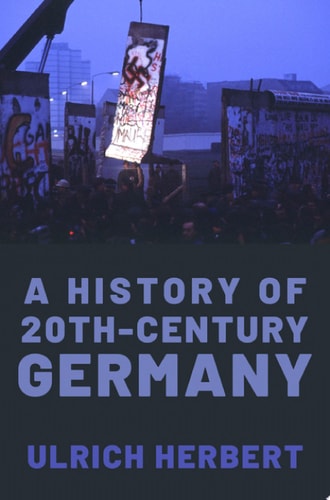
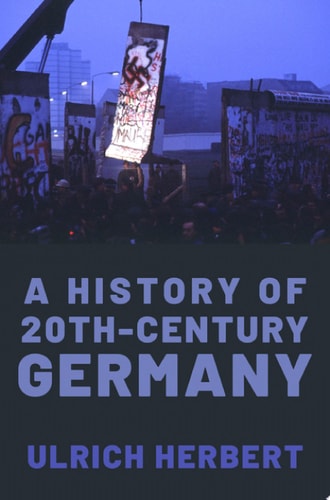
A History of Twentieth-Century Germany
0
0
As an Amazon Associate and affiliate partner, Menrva Books earns from qualifying purchases. Learn more
Author Description
Germany in the 20th century endured two world wars, a failed democracy, Hitler's dictatorship, the Holocaust, and a country divided for 40 years after World War II. But it has also boasted a strong welfare state, affluence, liberalization and globalization, a successful democracy, and the longest period of peace in European history.A History of Twentieth-Century Germany provides a survey of German history during a century of extremes. Ulrich Herbert sees German history in the 20th century as determined by two contradictory perspectives. On one hand, there are the world wars and great catastrophes that divide the country's history into two parts-before and after 1945. Germany is the birthplace of radical ideologies of the left and right and the only country in which each ideology became the foundation of government. This pattern left its stamp on both the first and second halves of the century. On the other hand, the rise of modern industrial society led to decades of conflict over the social and political order regardless of which political system was in force. Considering these contradictory developments, Herbert tackles the questions of both the collapse in the first half of the century and the development from a post-fascist, ruined society to one of the most stable liberal democracies in the world in the latter half.Herbert's analysis brings together wars and terror, utopia and politics, capitalism and the welfare state, socialism and liberal democratic society, gender and generations, culture and lifestyles, European integration and globalization. The resulting book sets a standard by which historians of the period will be measured in the future.
Menrva's Summary
THE THESIS
This work investigates the paradoxical trajectory of Germany across the twentieth century, examining how a nation transitioned from the epicenter of radical ideological catastrophe to a stable, liberal democratic society. Ulrich Herbert, a prominent historian, synthesizes decades of research to analyze the structural and political shifts that defined the German experience. He argues that the century is defined by the tension between the catastrophic failures of the first half and the subsequent modernization and stabilization of the second half, providing a comprehensive framework for understanding these contradictory developments.
THE SCOPE MAP
What You Will Find
- Analysis of the impact of two world wars and the Holocaust on German statehood.
- Examination of the transition from radical ideologies to a modern welfare state.
- Discussion of the role of industrialization, globalization, and European integration.
- Synthesis of social, cultural, and political history across the pre- and post-1945 divide.
Scope Limits
- The text focuses primarily on national-level political and social structures rather than micro-histories or individual biographies.
- It does not provide an exhaustive military history of the two world wars, focusing instead on their societal consequences.
THE AUTHORITY PERSPECTIVE
Historians and scholars recognize this text as a comprehensive and authoritative survey of the period. Readers frequently note the academic density of the prose, which provides a rigorous analytical foundation for understanding the complexities of German history.
Page Count:
1264
Publication Date:
2019-09-16
Publisher:
Oxford University Press
ISBN-10:
0190070641
ISBN-13:
9780190070649
Politics
History
German history
Germany
Europe
Politics & Government
World politics
New Used & Rental Textbooks
European History
World
20th Century
Community Tags
Other Editions(2)
Similar Books