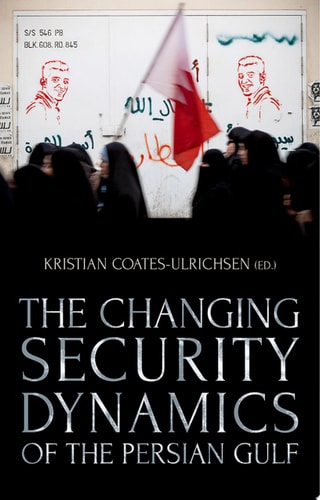
The Changing Security Dynamics of the Persian Gulf
0
0
As an Amazon Associate and affiliate partner, Menrva Books earns from qualifying purchases. Learn more
Author Description
The contradictory trends of the 'post-Arab Spring' landscape form both the backdrop to, and the focus of, this volume on the changing security dynamics of the Persian Gulf, defined as the six GCC states plus Iraq and Iran. The political and economic upheaval triggered by the uprisings of 2011, and the rapid emergence of the Islamic State of Iraq and Syria in 2014, have underscored the vulnerability of regional states to an intersection of domestic pressures and external shocks. The initial phase of the uprisings has given way to a series of messy and uncertain transitions that have left societies deeply fractured and ignited violence both within and across states. The bulk of the protests, with the notable exception of Bahrain, occurred outside the Gulf region, but Persian Gulf states were at the forefront of the political, economic, and security response across the Middle East.This volume provides a timely and comparative study of how security in the Persian Gulf has evolved and adapted to the growing uncertainty of the post-2011 regional landscape.
Menrva's Summary
THE THESIS
This volume investigates how the security architecture of the Persian Gulf has evolved in response to the regional instability triggered by the 2011 Arab Spring and the subsequent rise of the Islamic State. Author Kristian Coates Ulrichsen, a specialist in Middle Eastern affairs, utilizes a comparative framework to analyze the intersection of domestic political pressures and external shocks. The text argues that the Gulf Cooperation Council states, alongside Iraq and Iran, have transitioned into a period of profound uncertainty characterized by fractured societies and cross-border violence. By examining the regional response to these upheavals, the book provides a structured assessment of how state security strategies have adapted to a volatile post-2011 landscape.
THE SCOPE MAP
What You Will Find
- Analysis of the six GCC states, Iraq, and Iran
- Comparative study of regional security responses to the 2011 uprisings
- Examination of the impact of the Islamic State on regional stability
- Assessment of domestic versus external security threats
Scope Limits
- Does not provide a comprehensive history of the region prior to 2011
- Does not offer predictive modeling for future geopolitical outcomes
THE AUTHORITY PERSPECTIVE
Experts and scholars in international relations frequently cite this work as a reliable resource for understanding the complex security shifts within the Persian Gulf following the Arab Spring. Readers often note the analytical clarity of the prose, which effectively synthesizes regional political developments for both academic and policy-oriented audiences.
Page Count:
256
Publication Date:
2018-02-01
Publisher:
Oxford University Press
ISBN-10:
0190877383
ISBN-13:
9780190877385
Geopolitics
International relations
Middle Eastern
Middle East
Security Studies
Community Tags
Similar Books