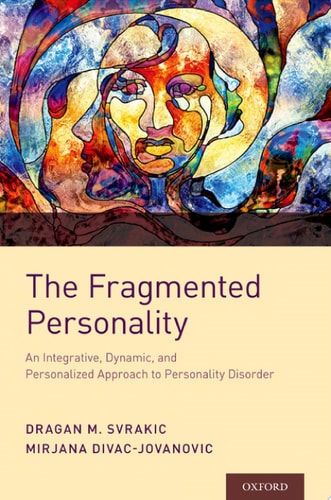
The Fragmented Personality
0
0
As an Amazon Associate and affiliate partner, Menrva Books earns from qualifying purchases. Learn more
Author Description
The Fragmented Personality Introduces A New Model For Diagnosing And Caring For Patients With Personality Disorder. This Book Reviews In Detail The Neuroscience Of Brain And Mind Development, Including The Neuroscience Of Psychoanalytic Concepts, Both For Normal And Disordered Personalities. In Contrast To The Current Static Classifications Of Personality Pathology, The Authors' Approach Yields A Dynamic And Personalized Diagnosis Within A 3d Diagnostic Space In Which Each Individual Is Uniquely Positioned. In This Model, Two Intersecting Dimensions, One Vertical, Representing The Person's Qualitative Level Of Mental Functioning (the How Of Personality), And The Other Horizontal, Representing His Or Her Adaptive Style (the What Of Personality) Are Cross Matched In The Unit Of Time. Such Dynamic Nosology Is Inherently Sensitive To Fluctuations In Mental Functioning Over Time And Context, And Gives The Clinician Precise Milestones For Monitoring Progress In Therapy. In This Book, The Authors Analyze The Impact Of Social Transitions On Adaptive Tasks, Personality And Psychopathology. They Argue That The Conservative Society, With Strict Socio-religious Norms, Favored The Psychopathology Of Neuroses Centered Around Guilt, Including Guilt For Not Fitting The Preapproved Norms. With The Postmodern Liberalization Of Normative Pressures, The Adaptive Task Has Changed From How To Fit Into What To Choose Among Many Accepted Alternatives, Creating Uncertainty Of Identity. This Uncertainty, Together With The Non-directive Society, Favors The Psychopathology Of Personality Disorder, And Indeed, The Prevalence Of Personality Disorder Has Increased In The Postmodern Period. Drs. Svrakic And Divac-jovanovic Argue That Fragmented Personality, A Deep And Early Fragmentation Of The Mind At Its Nonconscious Core Of Internalized Object Relations, Represents A Common Denominator Shared By All Clinical Variants Of Personality Disorder. They Conceptualize Personality Disorder As A Homeosta
Menrva's Summary
THE THESIS
This book investigates the core mechanisms of personality disorders by proposing a dynamic, three-dimensional diagnostic model that replaces static clinical classifications. Dragan M. Svrakic and Mirjana Divac Jovanovic, both experienced clinicians and researchers, utilize neuroscientific data and psychoanalytic theory to map mental functioning. They argue that personality disorders stem from a fundamental fragmentation of the mind's nonconscious core, exacerbated by the shifting pressures of postmodern society.
THE SCOPE MAP
What You Will Find
- A 3D diagnostic framework mapping mental functioning levels against adaptive styles.
- Neuroscientific analysis of brain and mind development in both normal and disordered states.
- Historical and sociological analysis of how social norms influence psychopathology.
Scope Limits
- The text focuses primarily on clinical diagnostic models rather than specific pharmacological treatment protocols.
- It does not provide an exhaustive survey of all existing personality disorder therapies.
THE AUTHORITY PERSPECTIVE
Clinicians and researchers frequently cite this work as a significant contribution to the shift toward dimensional rather than categorical diagnosis in psychiatry. Experts highlight the text's academic density and its utility for practitioners seeking to monitor patient progress through a more nuanced, individualized lens.
Page Count:
352
Publication Date:
2018-01-01
Publisher:
Oxford University Press
ISBN-10:
0190884584
ISBN-13:
9780190884581
Psychology
Neuroscience
Mental Health
Personality Disorders
Psychiatry
Community Tags
Similar Books