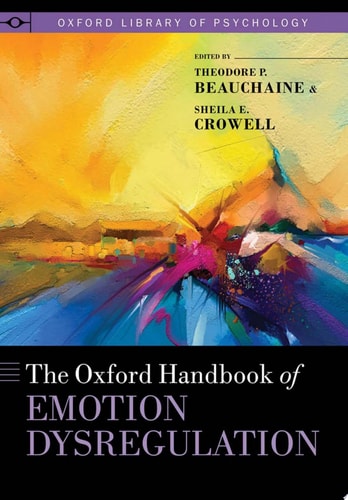
The Oxford Handbook of Emotion Dysregulation
0
0
As an Amazon Associate and affiliate partner, Menrva Books earns from qualifying purchases. Learn more
Author Description
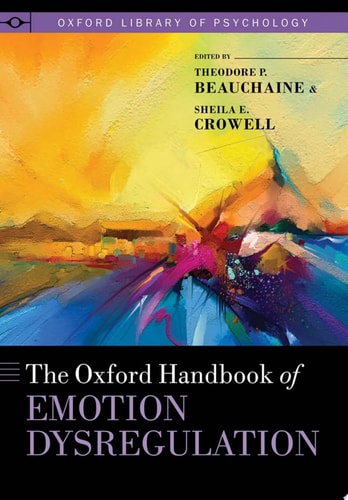
Emotion dysregulation, which is often defined as the inability to modulate strong negative affective states including impulsivity, anger, fear, sadness, and anxiety, is observed in nearly all psychiatric disorders. These include internalizing disorders such as panic disorder and major depression, externalizing disorders such as conduct disorder and antisocial personality disorder, and various others including schizophrenia, autism, and borderline personality disorder. Among many affected individuals, precursors to emotion dysregulation appear early in development, and often predate the emergence of diagnosable psychopathology.The Oxford Handbook of Emotion Dysregulation brings together experts whose work cuts across levels of analysis, including neurobiological, cognitive, and social, in studying emotion dysregulation. Contributing authors describe how early environmental risk exposures shape emotion dysregulation, how emotion dysregulation manifests in various forms of mental illness, and how emotion dysregulation is most effectively assessed and treated. Conceptualizing emotion dysregulation as a core vulnerability to psychopathology is consistent with modern transdiagnostic approaches to diagnosis and treatment, including the Research Domain Criteria and the Unified Protocol, respectively. This handbook is the first text to assemble a highly accomplished group of authors to address conceptual issues in emotion dysregulation research, define the emotion dysregulation construct across levels of cognition, behavior, and social dynamics, describe cutting edge assessment techniques at neural, psychophysiological, and behavioral levels of analysis, and present contemporary treatment strategies.
Menrva's Summary
THE THESIS
This handbook investigates emotion dysregulation as a core transdiagnostic vulnerability that underlies a broad spectrum of psychiatric disorders. Editors Sheila E. Crowell and Theodore P. Beauchaine compile contributions from leading researchers to establish a unified framework for understanding how affective modulation failures manifest across neurobiological, cognitive, and social domains. The text argues that by conceptualizing dysregulation as a fundamental mechanism rather than a symptom, clinicians can better align research and treatment with modern paradigms like the Research Domain Criteria.
THE SCOPE MAP
What You Will Find
- Analysis of emotion dysregulation across internalizing and externalizing psychiatric conditions.
- Integration of multi-level data including neural, psychophysiological, and behavioral markers.
- Evaluation of developmental precursors and early environmental risk factors.
- Review of contemporary assessment techniques and evidence-based treatment protocols.
Scope Limits
- Does not provide a singular, unified theory of emotion, but rather a collection of expert perspectives on dysregulation.
- Focuses primarily on clinical psychopathology rather than normative emotional development.
THE AUTHORITY PERSPECTIVE
Experts identify this volume as a foundational reference for researchers and clinicians working within the transdiagnostic model of mental health. Readers frequently note the academic density of the prose, which is intended for professionals and graduate-level students in the field of psychology.
Page Count:
520
Publication Date:
2020-03-05
Publisher:
Oxford University Press
ISBN-10:
0190689285
ISBN-13:
9780190689285
Psychology
Mental Health
Neuroscience
Academic
Psychiatry