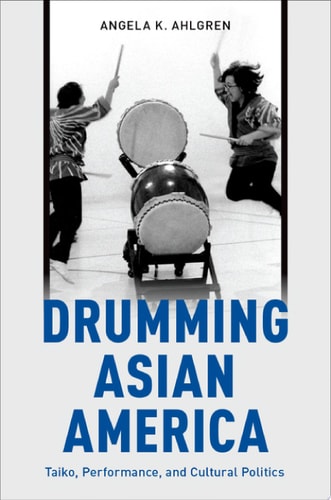
Drumming Asian America: Taiko, Performance, and Cultural Politics
0
0
As an Amazon Associate and affiliate partner, Menrva Books earns from qualifying purchases. Learn more
Author Description
With its dynamic choreographies and booming drumbeats, taiko has gained worldwide popularity since its emergence in 1950s Japan. Harnessed by Japanese Americans in the late 1960s, taiko's sonic largesse and buoyant energy challenged stereotypical images of Asians in America as either model minorities or sinister foreigners. While the majority of North American taiko players are Asian American, over 400 groups now exist across the US and Canada, and players come from a range of backgrounds. Using ethnographic and historical approaches, combined with in-depth performance description and analysis, this book explores the connections between taiko and Asian American cultural politics. Based on original and archival interviews, as well as the author's extensive experience as a taiko player, this book highlights the Midwest as a site for Asian American cultural production and makes embodied experience central to inquiries about identity, including race, gender, and sexuality. The book builds on insights from the fields of dance studies, ethnomusicology, performance studies, queer and feminist theory, and Asian American studies to argue that taiko players from a variety of identity positions perform Asian America on stage, as well as in rehearsals, festivals, schools, and through interactions with audiences. While many taiko players play simply for the love of its dynamism and physicality, this book demonstrates that politics are built into even the most mundane aspects of rehearsing and performing.
Menrva's Summary
THE THESIS
This book investigates how the practice and performance of taiko drumming function as a site for the negotiation of Asian American identity and cultural politics. Angela K. Ahlgren, a scholar and experienced taiko practitioner, utilizes ethnographic research, archival interviews, and performance analysis to examine how the physical act of drumming challenges historical stereotypes. The work argues that identity markers such as race, gender, and sexuality are actively performed and constructed through the embodied experience of taiko, even within non-coastal regions like the American Midwest.
THE SCOPE MAP
What You Will Find
- Historical development of taiko from 1950s Japan to its adoption by Japanese Americans in the late 1960s.
- Analysis of taiko as a form of cultural production in the Midwest.
- Theoretical frameworks integrating dance studies, ethnomusicology, and queer and feminist theory.
Scope Limits
- The text does not provide a comprehensive global history of taiko outside of its specific North American cultural context.
- It does not serve as a technical instructional manual for learning taiko drumming techniques.
THE AUTHORITY PERSPECTIVE
Scholars in performance studies and ethnomusicology recognize this work as a significant contribution to the study of embodied cultural politics. Readers frequently note the book's success in bridging academic theory with the lived, physical realities of musical performance.
Page Count:
202
Publication Date:
2018-01-01
Publisher:
Oxford University Press
ISBN-10:
0190880341
ISBN-13:
9780190880347
Music
Humanities
Performance Studies
Music
Dance
Sociology
Asian American
Community Tags
Similar Books