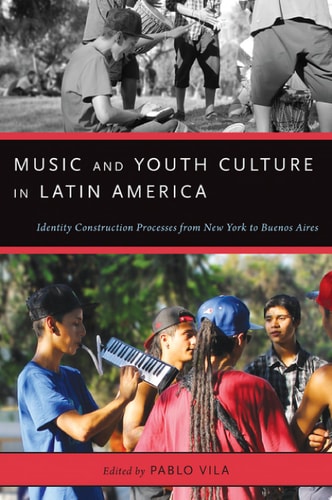
Music and Youth Culture in Latin America: Identity Construction Processes from New York to Buenos Aires
0
0
As an Amazon Associate and affiliate partner, Menrva Books earns from qualifying purchases. Learn more
Author Description
Music is one of the most distinctive cultural characteristics of Latin American countries. But, while many people in the United States and Europe are familiar with musical genres such as salsa, merengue, and reggaetón, the musical manifestations that young people listen to in most Latin American countries are much more varied than these commercially successful ones that have entered the American and European markets. Not only that, the young people themselves often have little in common with the stereotypical image of them that exists in the American imagination.Bridging this divide between perception and reality, Music and Youth Culture in Latin America brings together contributors from throughout Latin America and the US to examine the ways in which music is used to advance identity claims in several Latin American countries and among Latinos in the US. From young Latin American musicians who want to participate in the vibrant jazz scene of New York without losing their cultural roots, to Peruvian rockers who sing in their native language (Quechua) for the same reasons, to the young Cubans who use music to construct a post-communist social identification, this volume sheds new light on the complex ways in which music provides people from different countries and social sectors with both enjoyment and tools for understanding who they are in terms of nationality, region, race, ethnicity, class, gender, and migration status. Drawing on a vast array of fields including popular music studies, ethnomusicology, sociology, and history, Music and Youth Culture in Latin America is an illuminating read for anyone interested in Latin American music, culture, and society.
Menrva's Summary
THE THESIS
This volume investigates how music functions as a primary mechanism for identity construction among youth across diverse Latin American contexts and within the United States diaspora. Editor Pablo Vila, a scholar specializing in sociology and popular music, assembles a collection of interdisciplinary essays that challenge monolithic stereotypes of Latin American youth. The contributors argue that musical engagement serves as a strategic tool for navigating complex intersections of nationality, race, class, gender, and migration status in a globalized world.
THE SCOPE MAP
What You Will Find
- Case studies ranging from New York jazz scenes to Quechua-language rock in Peru.
- Analysis of post-communist social identification through music in Cuba.
- Theoretical frameworks integrating popular music studies, sociology, and history.
Scope Limits
- The text does not provide an exhaustive survey of all regional musical genres in Latin America.
- It does not focus on the commercial music industry or mainstream global pop exports.
THE AUTHORITY PERSPECTIVE
Scholars and students of Latin American studies frequently cite this work for its nuanced approach to identity politics and its departure from commercialized perceptions of regional music. The text is recognized as a valuable resource for understanding the sociological dimensions of musical practice in contemporary society.
Page Count:
304
Publication Date:
2014-01-01
Publisher:
Oxford University Press
ISBN-10:
0190205512
ISBN-13:
9780190205515
Music
Ethnic Studies
Music
Youth Culture
Sociology
American Studies
Humanities
Latin
Music History
Community Tags
Other Editions(2)
Similar Books