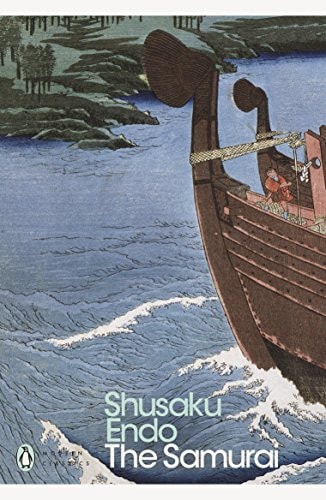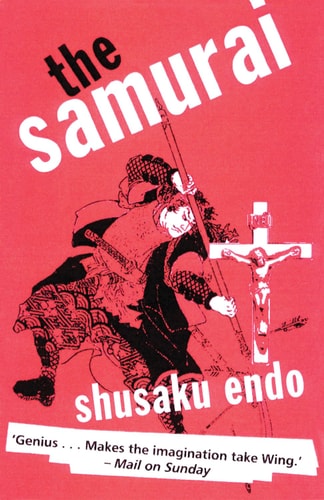
The Samurai
0
0
As an Amazon Associate and affiliate partner, Menrva Books earns from qualifying purchases. Learn more
Author Description
Considered one of the late Shusaku Endo's finest works, The Samurai seamlessly combines historical fact with a novelist's imaginings. Set in the period preceding the Christian persecutions in Japan recorded so memorably in Endo's Silence, this book traces the steps of some of the first Japanese to set foot on European soil.Rokuemon Hasekura, a low-ranking warrior, is chosen as one of Japan's envoys to the Viceroy of Mexico and Pope Paul V. The emissaries set sail in 1613, accompanied by an ambitious Franciscan missionary who hopes to bargain trading privileges with the West for the right to head his order in Japan. The arduous journey lasts four years, and the Japanese travel from Mexico to Rome, where they are persuaded that the success of their mission depends on their conversion willy-nilly to Christianity. In fact, the enterprise has been futile from the start and the mission returns to Japan where the political tides have the authorities are pursuing an isolationist policy and a ruthless stamping out of all Western influences. In the face of disillusionment and death, samurai Rokuemon's only support and solace come from the spiritual lord he is not even sure he believes in.
Menrva's Summary
THE PULSE
A low-ranking samurai is thrust into a global diplomatic mission that forces him to navigate the conflicting demands of his shogunate and his own burgeoning spiritual conscience. Rokuemon Hasekura, a man of modest status, is selected to lead a delegation to Mexico and Rome, a task that requires him to traverse vast oceans and alien cultures. He is shadowed by a manipulative Franciscan missionary whose personal ambitions threaten to compromise the integrity of the Japanese envoys. As the political climate in Japan shifts toward isolationism, Hasekura finds himself trapped between his duty to his lord and the encroaching influence of a foreign faith that he struggles to comprehend.
INSIDE THE PAGES
- Exploration of the clash between Eastern feudal loyalty and Western religious expansionism
- Detailed depiction of the 1613 diplomatic mission from Japan to Mexico and Rome
- Examination of the psychological toll of cultural displacement and political betrayal
- Use of a third-person narrative perspective to maintain distance from the protagonist's internal turmoil
- Integration of historical figures, including Pope Paul V, into a fictionalized framework
- Focus on the theme of spiritual ambiguity and the search for meaning in a hostile environment
- Pacing that mirrors the slow, arduous nature of seventeenth-century maritime travel
- Contrast between the rigid social hierarchy of Japan and the complex political maneuvering of the Vatican
THE COLLECTIVE ECHO
This work is widely regarded as a profound meditation on the intersection of faith, culture, and political power. The narrative is noted for its restrained prose and its ability to humanize the historical figures involved in the Keicho Embassy. Readers often highlight the author's skill in portraying the isolation of the protagonist as he navigates a world that views him as a mere pawn. The book stands as a significant exploration of the human condition under the pressure of conflicting ideologies and shifting historical tides.
Page Count:
336
Publication Date:
1984-01-01
Publisher:
Harper and Row
ISBN-10:
0006859526
ISBN-13:
9780006859529
Fiction
Historical Fiction
Adventure
Literary Fiction
Japanese
Genre Fiction
Religious Fiction
Historical