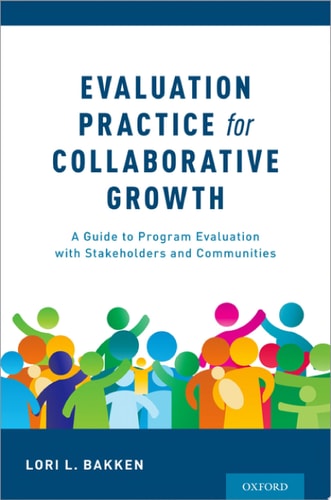
Evaluation Practice for Collaborative Growth: A Guide to Program Evaluation with Stakeholders and Communities
0
0
As an Amazon Associate and affiliate partner, Menrva Books earns from qualifying purchases. Learn more
Author Description
Evaluation Practice for Collaborative Growth highlights the approaches, tools, and techniques that are most useful for evaluating educational and social service programs. This book walks the reader through a process of creating answerable evaluations questions, designing evaluation studies to answer those questions, and analyzing, interpreting, and reporting the evaluation's findings so they are useful and meaningful for key stakeholders. The text concludes with a chapter devoted to the shifting landscape of evaluation practice as it faces complex systems and issues that are shaped by society. Additionally, the author provides a list of knowledge and skills needed to adapt to a changing landscape and encourages organizations to use evaluation as a mechanism for learning and adapting to change. Her orientation toward community-based approaches and social justice prevail throughout the book's content and align well with a reader's desire to be inclusive and accountable in programing efforts. Nonprofit leaders, social science professionals, and students will find this book helpful for understanding basic program evaluation concepts, methods, and strategies.
Menrva's Summary
THE THESIS
How can program evaluation be structured to foster collaborative growth and meaningful social impact within educational and social service organizations? Lori L. Bakken provides a comprehensive framework for practitioners to design and implement evaluations that prioritize stakeholder engagement and community inclusion. Drawing on her expertise in social science and program development, the author outlines a systematic process for formulating research questions, selecting appropriate methodologies, and translating complex data into actionable insights for diverse organizational contexts.
THE SCOPE MAP
What You Will Find
- Methodologies for creating answerable evaluation questions
- Strategies for designing studies that incorporate stakeholder feedback
- Techniques for analyzing, interpreting, and reporting evaluation findings
- Frameworks for adapting evaluation practices to complex societal systems
- Lists of essential knowledge and skills for modern evaluators
Scope Limits
- The text focuses primarily on educational and social service sectors rather than corporate or private sector evaluation
- It does not provide advanced statistical software tutorials or deep-dive quantitative data modeling
THE AUTHORITY PERSPECTIVE
Professionals in the nonprofit and social science sectors frequently identify this text as a practical resource for integrating social justice principles into standard evaluation workflows. Experts note that the book serves as a bridge between academic theory and the operational realities of community-based programming.
Page Count:
256
Publication Date:
2018-07-02
Publisher:
Oxford University Press
ISBN-10:
0190885378
ISBN-13:
9780190885373
Non-Fiction
Education
Social Action
Social justice
Nonprofit organizations
Community Tags
Similar Books