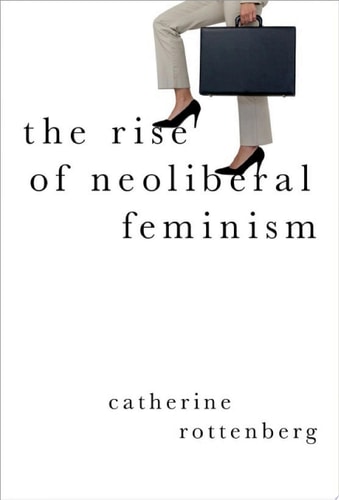
The Rise of Neoliberal Feminism
0
0
As an Amazon Associate and affiliate partner, Menrva Books earns from qualifying purchases. Learn more
Author Description
From Hillary Clinton to Ivanka Trump and from Emma Watson all the way to Beyoncé, more and more high-powered women are unabashedly identifying as feminists in the mainstream media. In the past few years feminism has indeed gained increasing visibility and even urgency. Yet, in her analysis of recent bestselling feminist manifestos, well-trafficked mommy blogs, and television series such as The Good Wife, Catherine Rottenberg reveals that a particular variant of feminism-which she calls neoliberal feminism-has come to dominate the cultural landscape, one that is not interested in a mass women's movement or struggles for social justice. Rather, this feminism has introduced the notion of a happy work-family balance into the popular imagination, while transforming balance into a feminist ideal. So-called "aspirational women" are now exhorted to focus on cultivating a felicitous equilibrium between their child-rearing responsibilities and their professional goals, and thus to abandon key goals that have historically informed feminism, including equal rights and liberation. Rottenberg maintains that because neoliberalism reduces everything to market calculations it actually needs feminism in order to "solve" thorny issues related to reproduction and care. She goes on to show how women of color and poor and immigrant women most often serve as the unacknowledged care-workers who enable professional women to strive toward balance, arguing that neoliberal feminism legitimates the exploitation of the vast majority of women while disarticulating any kind of structural critique. It is not surprising, then, that this new feminist discourse has increasingly dovetailedwith conservative forces. In Europe, gender parity has been used by Marine Le Pen and Geert Wilders to further racist, anti-immigrant agendas, while in the United States, women's rights has been invoked to justify interventions in countries with majority Muslim populations. And though campaigns such as the #MeToo and
Menrva's Summary
THE THESIS
This book investigates how a specific variant of feminism, termed neoliberal feminism, has been co-opted by market-driven ideologies to prioritize individual professional success over collective social justice. Catherine Rottenberg, a scholar in the field of gender and cultural studies, utilizes a critical analysis of popular media, bestselling manifestos, and contemporary political discourse to argue that this version of feminism serves to legitimize structural inequality. She posits that neoliberalism requires this specific feminist framework to manage the contradictions of reproduction and care in a capitalist society.
THE SCOPE MAP
What You Will Find
- Analysis of mainstream media representations including television series and mommy blogs
- Examination of the intersection between neoliberalism, gender, and labor exploitation
- Critique of how feminist rhetoric is utilized to support nationalist and anti-immigrant agendas
- Investigation into the reliance of professional women on the unacknowledged labor of marginalized groups
Scope Limits
- The text focuses primarily on Western cultural and political contexts
- It does not provide a comprehensive history of all feminist movements, focusing instead on the contemporary neoliberal iteration
THE AUTHORITY PERSPECTIVE
Scholars and critics frequently cite this work as a rigorous intervention in contemporary gender studies, noting its sharp critique of how feminist language is repurposed within corporate and political spheres. Readers often highlight the density of the prose, which is intended for an academic audience familiar with critical theory and sociological frameworks.
Page Count:
264
Publication Date:
2018-01-01
Publisher:
Oxford University Press
ISBN-10:
0190901241
ISBN-13:
9780190901240
Liberalism
Child Abuse
Sociology
Communications
Family & Consumer Sciences
Neoliberalism
Introduction to Human Communication
Feminism
Gender Studies
Community Tags
Other Editions(3)
Similar Books















Reader Comments
Share Your Thoughts
No comments yet. Be the first to share your thoughts!