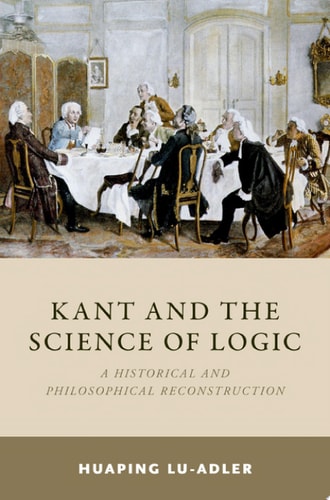
Kant and the Science of Logic
0
0
As an Amazon Associate and affiliate partner, Menrva Books earns from qualifying purchases. Learn more
Author Description
Immanuel Kant's enduring influence on philosophy is indisputable. In particular, Kant transformed debates on the fundamental questions in logic, and it is the significance and complexity of this accomplishment that Huaping Lu-Adler here explores. Kant's theory of logic represents a turning point in a history of philosophical debates over the following questions: Is logic a science, instrument, standard of assessment, or mixture of these? Kant's official answer to these questions centers on three distinctions: general versus particular logic; pure versus applied logic; pure general logic versus transcendental logic. The true meaning and significance of each distinction becomes clear, Lu-Adler argues, only if we consider two factors. First, Kant was mindful of various historical views on how logic relates to other branches of philosophy and to the workings of common human understanding. Second, he invented transcendental logic while struggling to secure metaphysics as a proper science, and this conceptual innovation in turn held profound implications for his mature theory of logic. Against this backdrop, Lu-Adler reassesses the place of Kant's theory in the history of philosophy of logic and highlights certain issues that are debated today, including normativity of logic and the challenges posed by logical pluralism. Kant and the Science of Logic is both a history of philosophy of logic told from the Kantian viewpoint and a reconstruction of Kant's theory of logic from a historical perspective. It is a vital contribution to the study of Kantian logic.
Menrva's Summary
THE THESIS
This book investigates the core question of how Immanuel Kant defined logic as a science and how his specific conceptual distinctions shaped the history of philosophical inquiry. Huaping Lu-Adler, a scholar of Kantian philosophy, examines the historical context and intellectual struggles that led Kant to develop his mature theory of logic. By analyzing Kant's primary distinctions—general versus particular, pure versus applied, and pure general versus transcendental logic—the author argues that these frameworks were essential to Kant's broader project of securing metaphysics as a rigorous science.
THE SCOPE MAP
What You Will Find
- A detailed analysis of Kant's three primary logical distinctions.
- An examination of the historical debates regarding logic as a science, instrument, or standard of assessment.
- A reconstruction of Kant's invention of transcendental logic.
- A discussion of contemporary issues such as the normativity of logic and logical pluralism.
Scope Limits
- The text does not provide a general introduction to logic for non-philosophers.
- It does not cover the entirety of Kant's critical philosophy outside of its direct relation to his logical theory.
THE AUTHORITY PERSPECTIVE
Scholars and students of Kantian philosophy frequently note the academic density and rigorous historical analysis present in this text. Experts highlight this work as a significant contribution to the specialized study of Kant's logical framework and its ongoing relevance to modern philosophical debates.
Page Count:
304
Publication Date:
2018-01-01
Publisher:
Oxford University Press
ISBN-10:
0190907150
ISBN-13:
9780190907150
History
Philosophy
Immanuel Kant
Metaphysics
Epistemology
Philosophy history
Logic
Community Tags
Similar Books