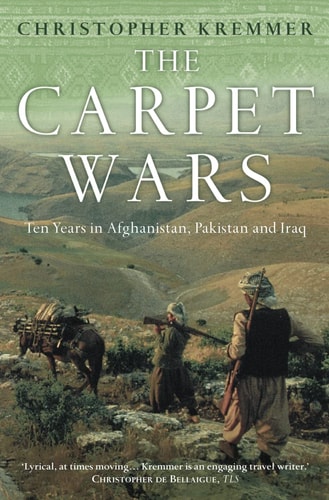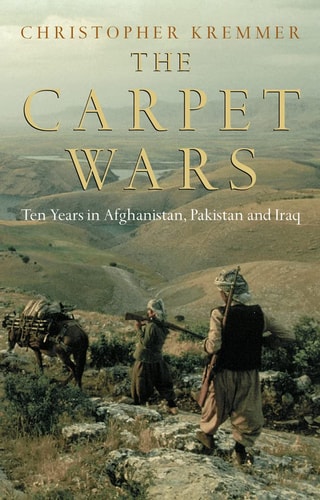
The Carpet Wars: A Journey Across the Islamic Heartlands
0
0
As an Amazon Associate and affiliate partner, Menrva Books earns from qualifying purchases. Learn more
Author Description
In Afghanistan, Pakistan, Kashmir, Iran, Iraq, and the Central Asian republics, carpets are viewed as objects of reverence and expressions of the highest artistic achievement. As the region's second largest export behind oil, they are also big business. "The early Muslims inhabited lands where people were born on carpets, prayed on them, and covered their tombs with them. For centuries, carpets have been a currency and an export, among the first commodities of a globalized trading system," writes author Christopher Kremmer. Even in the midst of turmoil and war, a bazaar will spring up during breaks in the fighting and carpet merchants will quickly resume business as if nothing had happened. In this detailed look at the culture and recent history of these countries, the carpet trade serves as both backdrop and metaphor for the shadowy and complex politics of the region in which trickery, illusion, and manipulation are part of the game. The result of 10 years spent as a journalist in the region, Kremmer's book explains how the fragile web of tribal and religious alliances and the influence of outside powers have impacted the politics and economy of the area and began a continuous cycle of exile and return, along with the rise of militarism and terrorism. The book also serves as excellent travel writing, with fascinating anecdotes and telling conversations and encounters that illustrate the customs of a region that is now the focus of international attention. --Shawn Carkonen
Menrva's Summary
THE THESIS
How does the ancient, enduring trade of carpet weaving serve as a lens to understand the volatile political, religious, and social landscapes of the Islamic heartlands? Christopher Kremmer, a seasoned journalist with a decade of experience in the region, utilizes the carpet trade as both a literal commodity and a metaphorical framework to examine the complex power dynamics of Afghanistan, Pakistan, Iran, and Central Asia. By documenting the resilience of these markets amidst conflict, he illustrates how tribal alliances, external geopolitical interference, and the cycle of displacement have shaped the modern history of these nations.
THE SCOPE MAP
What You Will Find
- Historical analysis of the carpet trade as a foundational element of regional commerce and cultural identity.
- Investigative reporting on the intersection of local tribal politics and international geopolitical influence.
- First-hand travel accounts and ethnographic anecdotes from bazaars and conflict zones.
- Examination of the socio-economic impact of regional instability on traditional craftsmanship and trade routes.
THE AUTHORITY PERSPECTIVE
This work provides a dense, observational account of the region that balances journalistic rigor with the personal perspective of a long-term resident. The framing suggests an accessible yet deeply researched introduction to the complexities of Central Asian and Middle Eastern politics through the unique prism of a traditional industry.
Page Count:
384
Publication Date:
2002-01-01
Publisher:
HarperCollins
ISBN-10:
0007142390
ISBN-13:
9780007142392
History
Travel
Politics
Middle East
Sociology
Rug And Carpet Industry
Islamic Countries
Asia
Central Asia
Silk Road
Community Tags
Similar Books